
Karpathy's AutoResearch Is the Agent Workflow Everyone's Copying
Andrej Karpathy released AutoResearch, an autonomous agent workflow that blew up on Reddit. Here's why the program.md pattern matters more than the tool itself.
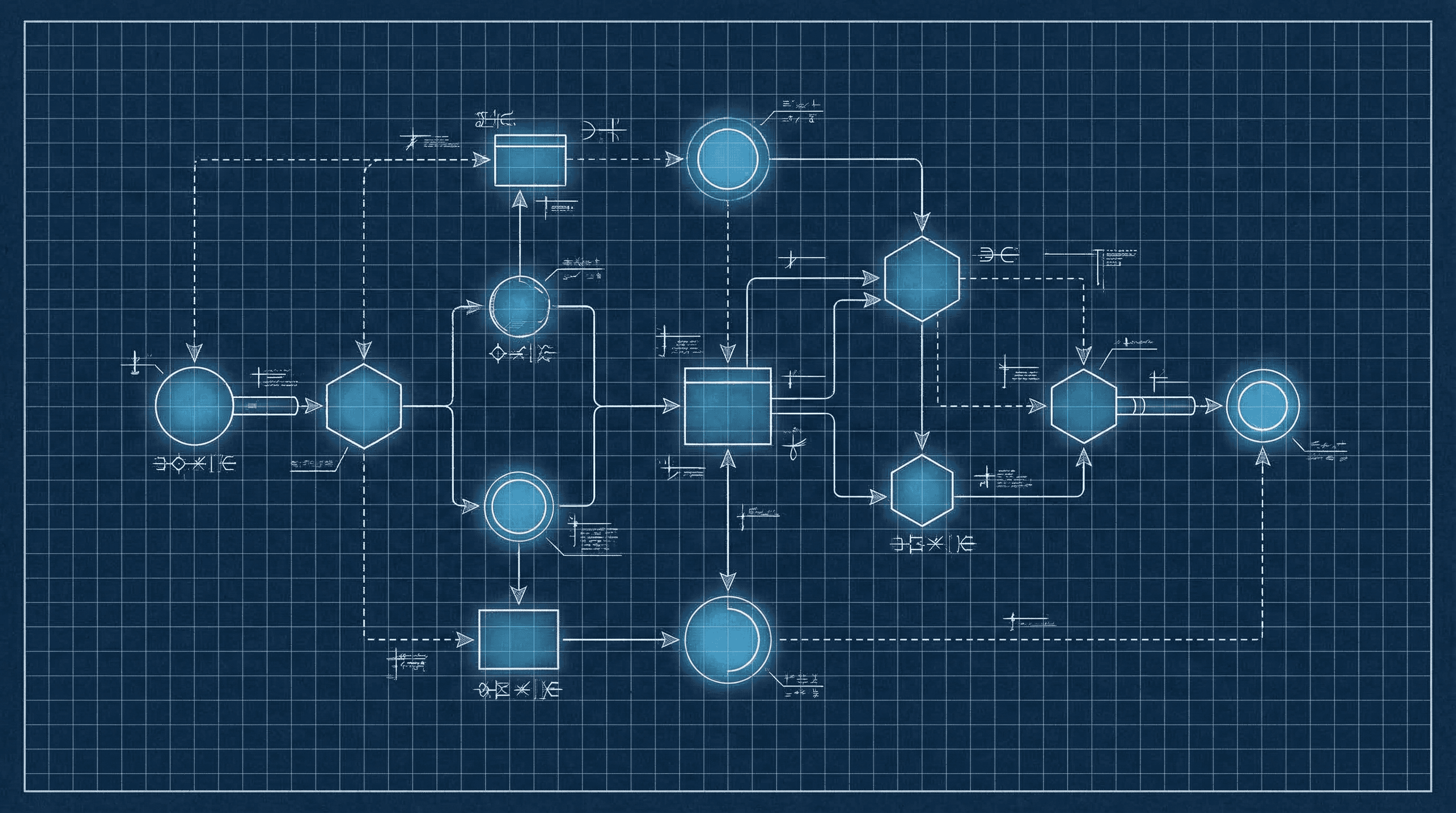
Andrej Karpathy just dropped "autoresearch" -- an autonomous AI agent workflow for doing research. Think of it as a loop: the agent reads a topic, searches for papers, synthesizes findings, identifies gaps, and repeats. It blew up on Reddit. 233 upvotes and 87 comments on r/LocalLLaMA in a few days. The usual Karpathy reception -- half the comments worshipping the ground he walks on, the other half calling him out for overpromising.
But here's the thing. The most interesting part of autoresearch isn't the research automation. It's a file called program.md.
What Karpathy actually built#
AutoResearch is a structured agent workflow. The agent gets a research topic, breaks it into sub-questions, searches for relevant papers and sources, reads and summarizes them, identifies what's missing, and loops back to fill the gaps. It runs autonomously until it has enough material to produce a coherent research document.
If you've been following the agent space, this pattern isn't new. Eval loops, tool-calling agents, iterative refinement -- these are standard building blocks in 2026. What Karpathy did is package them into a clean, opinionated workflow and open-source it with his name attached, which guarantees adoption.
The Reddit response was split in a way that tells you something about where the agent community is right now. One commenter put it perfectly: "He promised us autonomous systems that would do all the boring shit." There's a growing frustration that we keep getting demos of agents doing research -- reading papers, summarizing text, generating reports -- while the actual boring operational work that eats everyone's day remains un-automated. Research is the easy use case. The hard ones are the ones that touch real systems, real data, and real workflows with consequences.
Then there's the skeptic take: "Karpathy is hallucinating and stuck in transformers and AGI loop." Harsh, but it reflects a real divide. One camp sees every new agent tool as a step toward autonomous systems. The other sees it as the same demo repackaged with better marketing. The truth is somewhere in between, and the interesting signal is in the details of how autoresearch is structured.
The program.md pattern#

The top-voted insight in the Reddit thread was this: "the program.md pattern is what's actually interesting here."
What does that mean? In autoresearch, program.md is essentially the agent's operating manual. It's a markdown file that defines the agent's purpose, constraints, workflow steps, and decision-making rules. The agent reads it on startup and uses it as a persistent reference for what it should do and how it should do it.
This is a deceptively powerful idea. Instead of hardcoding agent behavior in Python or JavaScript, you write it in natural language. The program file becomes a contract between you and the agent. You define what "done" looks like. You specify when to stop searching. You set boundaries on what sources to trust. The agent interprets and executes against that specification.
Why does this matter? Because it makes agent behavior editable by anyone who can write English. You don't need to understand the underlying code to modify what the agent does. You change the program file, and the agent's behavior changes. It's configuration-as-prose.
I've been seeing this pattern emerge independently in multiple projects. Claude's system prompts, OpenClaw's agent instructions, custom GPTs' instructions field -- they're all variations of the same idea. A natural language specification that governs agent behavior. Karpathy just gave it a clean name and a clean implementation.
The implications are worth thinking about. If agent behavior is defined in markdown, then agent behavior is version-controllable. You can diff two versions of an agent's personality. You can A/B test instruction sets. You can roll back a change that made your agent too aggressive or too conservative. Software engineering practices applied to agent behavior, mediated through prose instead of code.
Why DIY agent workflows are harder than they look#
AutoResearch is a great demo. It's also a trap.
If you watch it work and think "I could build something like this for my use case," you're probably right. The core loop isn't complicated. But the gap between "working demo" and "reliable system I depend on" is where most people give up.
Here's what happens when you try to productionize a DIY agent workflow:
First, the agent needs to run continuously. Not in a Jupyter notebook. Not kicked off manually. It needs to be always-on, monitoring for triggers, and executing without supervision. That means a server, a process manager, restart logic, and health checks. You're now an ops person.
Second, state management. Your agent needs to remember what it's already done. If it crashes and restarts, it shouldn't redo three hours of research. It shouldn't send the same summary twice. It needs persistent state, which means a database, which means schema design, migrations, and backup strategy. You're now a backend engineer.
Third, the LLM integration itself. API rate limits, token counting, context window management, fallback models when your primary provider has an outage, cost tracking so a runaway loop doesn't burn your API budget overnight. You're now a platform engineer.
Fourth, output delivery. Your agent produced a research document. Great. Now how does it reach you? Email? Slack? Telegram? Each channel has its own API, authentication, formatting constraints, and failure modes. You're now an integration engineer.
Each of these problems is solvable. None of them are interesting. They're the infrastructure tax you pay to run any autonomous agent in production. And every hour you spend on infrastructure is an hour you didn't spend on the thing that actually matters -- defining what your agent does and how it thinks.
The case for managed agent infrastructure#
This is the problem space RapidClaw operates in. We're built on OpenClaw, the open-source AI agent framework, and we handle the infrastructure layer so you can focus on the agent behavior layer -- the program.md part, if you will.
You define what your agent does. You set its personality, its tools, its triggers, its constraints. We handle the server, the uptime, the Telegram integration, the state persistence, and the model routing. Your agent runs 24/7 without you managing a VPS or debugging Docker containers at midnight.
The Karpathy autoresearch workflow is a beautiful example of what's possible when you get the agent design right. But most people who try to replicate it will spend 80% of their time on infrastructure and 20% on agent behavior. That ratio should be inverted. The value is in the program file, not the plumbing.
If you've been inspired by autoresearch and want to build your own always-on agent -- whether for research, client management, content curation, or anything else -- the question isn't whether you can build the workflow. You can. The question is whether you want to also build and maintain the platform underneath it.
What to take away from autoresearch#
Karpathy's contribution here isn't the research loop. It's the formalization of agent workflows as structured, editable, version-controllable specifications. The program.md pattern will outlive autoresearch as a specific tool. It's the right abstraction at the right level.
If you're building agents today, steal this pattern regardless of what framework you use. Write your agent's behavior as a document before you write a line of code. Make it specific. Make it testable. Version control it. Treat it like a product spec, because that's what it is.
The agent space is moving from "can we build autonomous systems" to "how do we define and control what autonomous systems do." That's a much more interesting question, and Karpathy just contributed a solid answer to it.
Ready to build your own AI agent?
Deploy a personal AI agent to Telegram or Discord in 60 seconds. From $19/mo.
Get StartedStay in the loop
New use cases, product updates, and guides. No spam.