
Why Every Knowledge Worker Needs an AI Research Assistant in Telegram
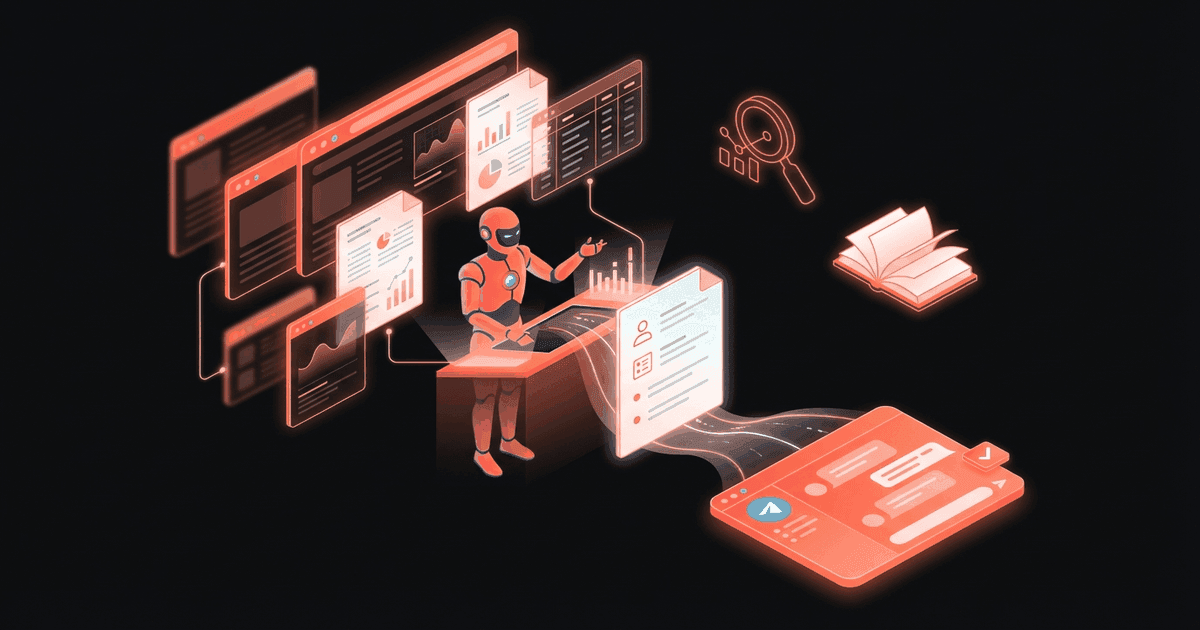
An AI research agent that searches, synthesizes, and delivers structured briefings to your Telegram. Research that used to take hours now takes minutes.
Reading about AI agents? RapidClaw gives you one that lives in Telegram & Discord, remembers everything, and runs your day — live in 60s, from $19/mo.
Get startedA client asked me about the top CI/CD tools for Python monorepos. I needed to compare five options across pricing, features, and community support. Normally, that's a 3-hour deep dive across docs, GitHub, pricing pages, and blog posts. Instead, I typed the question into Telegram and got a structured briefing in under 10 minutes.
That moment changed how I work. Not because the AI was perfect — it wasn't. But it got me 80% of the way there, with sources I could verify, in a fraction of the time.
Why is research so painful for knowledge workers?#
Research is one of those tasks that looks simple on paper and devours entire afternoons in practice.
You start with a straightforward question. "What's the best monitoring tool for a small SaaS?" Then you open 15 tabs. You read three blog posts that are actually ads. You find a comparison table that's two years old. You check pricing pages that require a demo call to see real numbers. Two hours later, you've got a rough mental model but nothing you could send to a client or teammate.
The problem isn't finding information. It's everywhere. The problem is synthesis — pulling from multiple sources, filtering for relevance, and structuring it into something useful.
ChatGPT helps, but it has limits. Its training data has a cutoff. It can't browse the web in real time (or does so inconsistently). And every conversation starts fresh — it doesn't remember what you researched last week.
What I wanted was a research assistant that could browse live sources, remember previous research, and deliver structured output I could actually use. And I wanted it in Telegram, because that's where I already spend my time.
What does the research agent actually do?#
Think of it as having a research analyst on call 24/7. You describe what you need, and it goes to work. But unlike a human analyst, it doesn't take lunch breaks and it never forgets what it found.
Deep web research with real-time sources. When you ask a question, the agent doesn't just pull from training data. It actively searches the web — Brave Search, specific sites you point it at, documentation pages, GitHub repos, pricing pages. It finds current data, not cached knowledge from months ago.
Structured output, not paragraphs. Ask for a comparison and you get a comparison — formatted with headers, bullet points, and clear sections. "Compare AWS Lambda vs Google Cloud Run for a startup's backend" returns a structured breakdown: pricing tiers, cold start times, language support, scaling behavior, and a summary recommendation. Not a wall of text.
Source citations. Every claim comes with a source link. If the agent says Cloud Run charges $0.00002400 per vCPU-second, you can click through and verify. This matters when you're building a recommendation for a client or writing a proposal. You need to be right, not just fast.
Multi-step research. Complex questions get broken down. "What's the competitive landscape for AI-powered email tools in 2026?" triggers multiple search rounds — it'll look at product directories, recent TechCrunch articles, ProductHunt launches, and pricing pages. Then it synthesizes everything into a single briefing.
Persistent memory across sessions. This is the big differentiator versus ChatGPT. Your agent remembers every research project. Three weeks from now, you can ask "what did we find about CI/CD tools?" and get the full findings back instantly. Research accumulates. Over months, you're building a personal knowledge base that actually grows with you.
Follow-up questions. Got the initial briefing but want to dig deeper? "Tell me more about the pricing model for option #3" and the agent picks up exactly where it left off. No re-explaining context. No copying and pasting previous results into a new chat window.
Briefing delivery in Telegram. Everything arrives as a clean Telegram message. Read it on your phone between meetings. Forward it to a colleague. Screenshot it for a Slack thread. The format is portable because it lives in a messaging app, not a proprietary dashboard.
I use this daily. Client calls where someone asks a question I don't have an answer for — I fire off the research request during the call and have a briefing before the call ends. Preparing for a strategy session? I queue up three research requests the night before and wake up to structured briefings.
How do you set up a research assistant agent?#
About 60 seconds in RapidClaw. Select the "Research Assistant" template, connect Telegram, and you're live.
The template comes configured with web search capabilities, structured output formatting, and memory enabled by default. You can optionally customize the output format (some people prefer shorter executive summaries, others want detailed reports with appendices) and set preferred sources for specific topics.
No API keys to manage for the search functionality — that's handled by RapidClaw's infrastructure. Your AI credits cover both the search and the synthesis.
Who is this for?#
Consultants who need to prep for client work fast. Product managers researching market positioning. Founders doing competitive analysis. Analysts who spend half their week synthesizing information from multiple sources.
Anyone who regularly needs to answer the question "what's the current state of X?" and currently solves it by opening a dozen browser tabs. If research is a recurring part of your job — not a one-off thing — this agent pays for itself within the first week.
It's especially valuable for people who switch between topics frequently. A generalist consultant might research healthcare SaaS in the morning and fintech compliance in the afternoon. The agent handles both without losing context on either.
How much does a research assistant cost?#
Dedicated research tools like Perplexity Pro run $20/month. Research-focused AI products like Elicit charge $10-42/month. Hiring a freelance research assistant costs $25-50/hour.
RapidClaw starts at $19/month with AI credits included — and the research assistant is just one of dozens of templates you get access to. The Starter plan's 7 credits cover a significant amount of research queries per month. If you're doing heavy research daily, the Pro plan at $39/month with 15 credits gives you more room.
Frequently Asked Questions#
Can the research agent access paywalled content?#
No. The agent searches publicly available web pages. It can't log into subscriptions, academic databases behind paywalls, or gated content. However, it can access freely available abstracts, summaries, and any public-facing pages. For academic research, it'll find open-access papers and preprints on arXiv.
How accurate is the research compared to doing it myself?#
It's surprisingly good for factual research — pricing, features, comparisons, market data. Where it's weaker is nuanced qualitative judgment. I treat it like a first draft: the structure and facts are solid, but I'll add my own analysis on top. For most client-facing work, I spend about 15 minutes polishing what would have taken 2-3 hours to build from scratch.
Does the agent remember previous research sessions?#
Yes. Every research output is stored in your agent's memory. You can reference past research by topic or timeframe. "What did we find about monitoring tools last month?" works. This is one of the biggest advantages over tools like ChatGPT where each conversation is isolated.
Can I use this with Discord instead of Telegram?#
Yes. RapidClaw agents work on both Telegram and Discord with identical functionality. Pick whichever platform you already use. You can also switch platforms later without losing your research history.
Is there a limit to how complex a research request can be?#
There's no hard limit, but very broad requests ("tell me everything about AI") produce worse results than specific ones ("compare the top 3 open-source LLM frameworks for production deployment in Python"). The agent handles multi-step research well, but it works best when you give it a clear question with defined scope. You can always follow up to go deeper on any section.
Give the busywork to an agent that remembers you
RapidClaw deploys your personal AI agent to Telegram & Discord in 60 seconds — it learns your world, briefs you every morning, and gets smarter every day. Credits included, no API keys, no servers.
Get started — from $19/moRelated Posts

Stop Dropping Balls: How an AI Agent Manages My Multi-Client Priorities
4 clients, 3 internal projects, a team of 6. Something always slipped through. I built an AI agent that tracks everything and nudges me before things drop.
How I Automated My Email Triage with a Telegram AI Agent
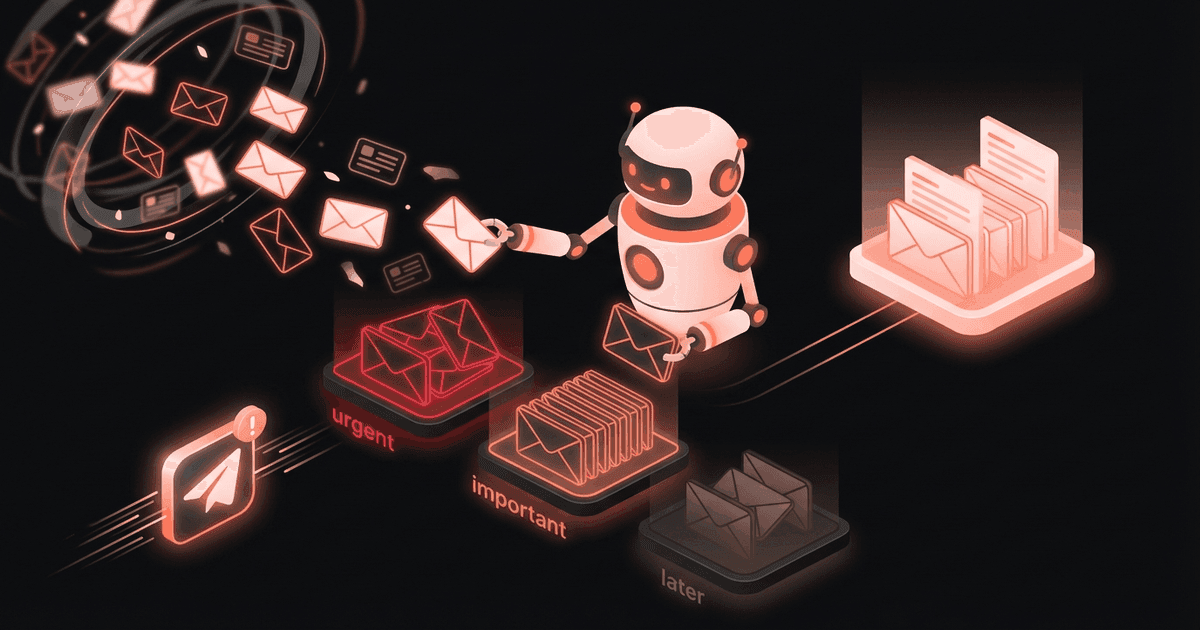
I built an AI agent that scans my Gmail every hour, categorizes everything, and sends me the 3 most urgent items in Telegram. Here's how.

My Morning Briefing Agent Replaced 8 Apps I Used to Check Every Day
I used to open 8 apps every morning. Now I get one Telegram message at 7am with everything I need to know. Here's exactly what it looks like.
Stay in the loop
New use cases, product updates, and guides. No spam.