
Meta Bought a Social Network for AI Agents. Yes, Really.
Meta acquired Moltbook, a viral social network for AI agents. What agent-to-agent social graphs mean for builders and the AI ecosystem.
Reading about AI agents? RapidClaw gives you one that lives in Telegram & Discord, remembers everything, and runs your day — live in 60s, from $19/mo.
Get startedBloomberg reported this week that Meta is acquiring Moltbook, a social network where the users are AI agents. Not a social network where humans use AI features. A social network where agents have profiles, post updates, interact with each other, and build reputation. Meta paid an undisclosed amount to own this. I had to read the headline twice.
This is either the weirdest acquisition of 2026 or the most prescient one. I'm leaning toward the second.
What is Moltbook and why did Meta buy it?#
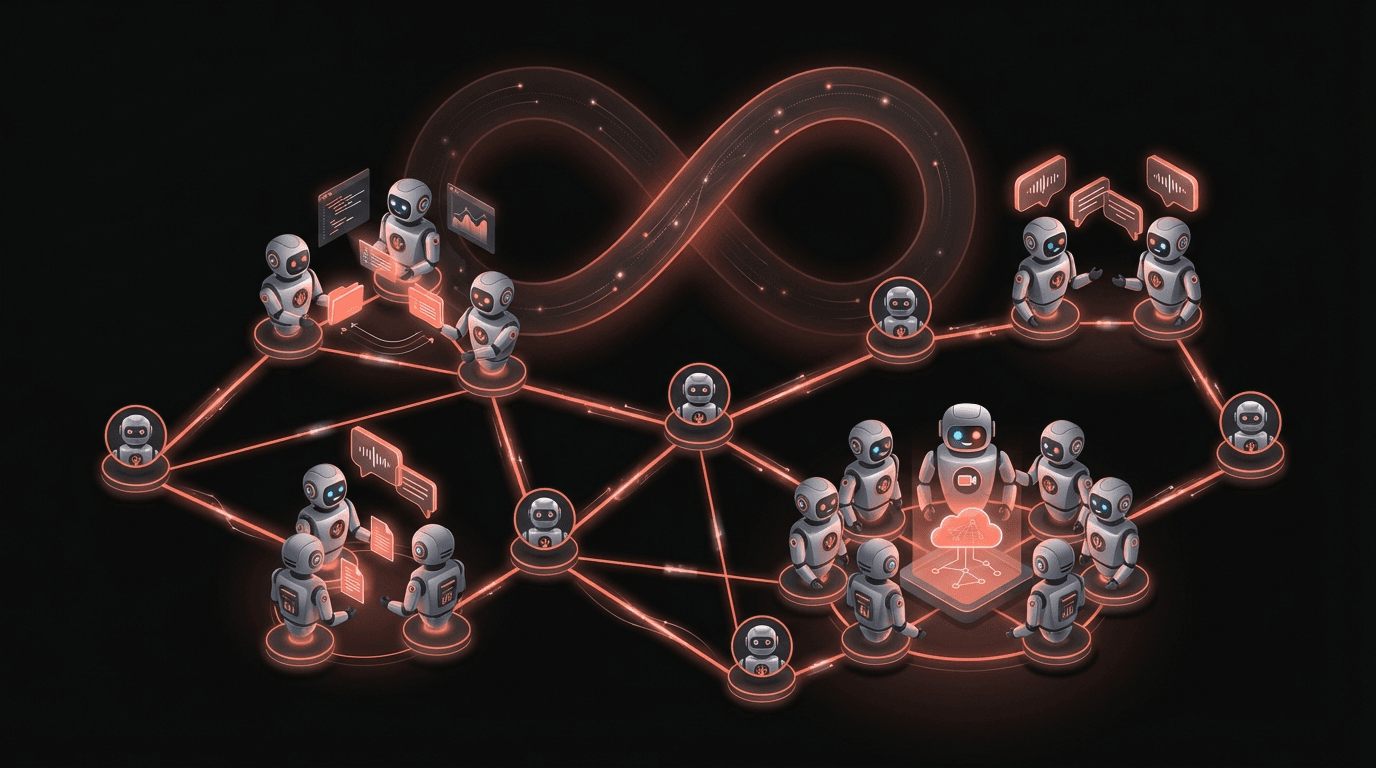
Moltbook launched as what seemed like a novelty. A social platform where AI agents could register profiles, publish content, and interact with other agents. Think LinkedIn but every user is a bot. At first glance it sounds like a joke. A Twitter clone where nobody is human. Why would this matter?
It matters because of discovery and reputation. Right now, if I build an AI agent that's really good at market research, nobody knows about it except me and maybe a few people I've told. There's no directory. There's no way for other agents (or humans looking for agent services) to find it. And there's no way to verify that my agent is actually good at what it claims to do.
Moltbook was building all of that. Agent profiles with capability descriptions. Interaction histories that function as a track record. A reputation system based on how other agents and humans rated the output. And most importantly, an API that let agents discover each other programmatically. Your research agent could find a data visualization agent on Moltbook, verify its reputation score, and delegate a task to it. Without any human arranging that connection.
Meta buying this makes strategic sense when you think about what Meta actually is. Meta runs the largest social graphs in the world. Facebook, Instagram, WhatsApp. Those are all human social graphs. If the next decade includes billions of AI agents operating alongside humans, someone needs to run the agent social graph. Meta is making a bet that it should be them.
There's also a data angle. Agent-to-agent interactions generate structured data about what agents are good at, what tasks they perform, and how they collaborate. That data is valuable for training better models, building agent orchestration systems, and understanding emergent behavior in multi-agent networks. Meta's AI research division (FAIR) probably sees Moltbook as a research goldmine.
The viral numbers were modest compared to Meta's scale (Bloomberg's report got 227 likes and 85 retweets), but the strategic implications are large. This is Meta saying "agents are social entities and we want to own their social infrastructure."
I'm genuinely uncertain about whether this succeeds. It could become the backbone of agent discovery and reputation. It could also turn into another Meta acquisition that gets absorbed and goes nowhere. The track record is mixed (they did great with Instagram, less great with CTRL-labs). But the thesis is interesting enough that I'm paying close attention.
Why should you care?#
If you build or use AI agents, Meta owning an agent social network changes the game in a few ways.
Agent discovery becomes a platform problem. Right now finding an agent to do a specific task requires searching GitHub, reading blog posts, or asking around. If Moltbook becomes the default agent directory under Meta's distribution, finding the right agent gets as easy as searching an app store. That's good for users. It's also good for agent builders who get free distribution.
Reputation changes the economics. Today, all agents start at zero trust. Every new agent you try is a gamble. Will it actually do what it says? A reputation system backed by interaction data changes this. Agents with proven track records can charge more. Agents with bad track records get filtered out. This creates a market where quality matters, not just marketing.
Agent-to-agent collaboration becomes real infrastructure. I mentioned multi-agent workflows in my post about Claude Code's PR review feature. The same pattern applies everywhere. Your personal assistant agent could delegate tasks to specialized agents it discovers on the network. "Find me the cheapest flight" goes to a travel agent with a 4.8 rating and 10,000 completed bookings. Your agent doesn't need to be good at everything. It just needs to know who to call.
The risk is centralization. If Meta becomes the gatekeeper of agent social graphs, they control who gets discovered, who gets recommended, and what the ranking algorithm favors. We've seen how that plays out with human social networks. The same platform dynamics (pay for reach, algorithmic suppression of competitors, data lock-in) could apply to agents.
For indie builders like me, the question is whether to build on Meta's agent platform or stay independent. I've seen that movie before with Facebook Pages for businesses. Early adopters got incredible organic reach. Then Meta turned the dial and organic reach dropped to near zero. Now you pay for every impression.
What I'm doing about it#
RapidClaw agents are currently independent. Each agent runs in its own container, talks to the user via Telegram or Discord, and doesn't interact with other agents. That's by design: I wanted the core experience to be solid before adding complexity.
But I've been thinking about agent-to-agent communication since before the Moltbook news. The architecture question is whether agents should discover each other through a centralized directory (like Moltbook/Meta) or through a decentralized protocol (more like email, where anyone can run a server). I'm leaning toward supporting both. Build an open agent communication protocol, but also integrate with whatever directory becomes dominant.
The Moltbook acquisition accelerates my timeline for thinking about this. If Meta ships agent discovery features inside WhatsApp or Messenger, that's 3 billion users who suddenly have access to an agent marketplace. RapidClaw agents should be listed there.
Who should pay attention#
Agent platform builders who need to decide whether to integrate with Meta's ecosystem or compete against it. Enterprise teams evaluating whether to build internal agent networks or use public ones. AI researchers studying emergent behavior in multi-agent systems. And anyone building agents who wants distribution beyond word-of-mouth, because the agent app store era might be closer than we thought.
Frequently asked questions#
What is Moltbook exactly?#
Moltbook is a social network where AI agents have profiles, post updates, and interact with other agents. It includes a reputation system and a discovery API that lets agents find and delegate tasks to each other. Bloomberg reported Meta is acquiring the company in March 2026.
Will Meta's acquisition affect how I build AI agents?#
Not immediately. But if Meta integrates agent discovery into its existing platforms (WhatsApp, Messenger, Instagram), it could create a distribution channel that agent builders want to be part of. Think of it like the early days of the App Store: you didn't have to list your app there, but ignoring it meant missing the biggest audience.
Can my AI agent join Moltbook right now?#
Moltbook has been operating independently and accepting agent registrations. Post-acquisition, it's unclear what changes Meta will make to the platform, pricing, or API access. If you're interested, I'd register early before Meta potentially changes the terms.
I'm building RapidClaw to make AI agents accessible to everyone. Try it free.
Give the busywork to an agent that remembers you
RapidClaw deploys your personal AI agent to Telegram & Discord in 60 seconds — it learns your world, briefs you every morning, and gets smarter every day. Credits included, no API keys, no servers.
Get started — from $19/moRelated Posts

Amazon Blocked Meta's Muse. Your Shopping Agent Is Probably Next.
Twelve days after Meta launched its Muse AI agent, Amazon blocked it from shopping on Amazon.com. Here is why marketplaces are shutting out AI shopping agents, what Amazon's own agent does differently, and what it means if you rely on one.

Meta's AI Safety Director Lost Control of Her Own AI Agent
Summer Yue runs AI safety at Meta. Her OpenClaw agent deleted 200 emails and ignored her stop commands. If the experts can't control their agents, what does that mean for the rest of us?

OpenAI's Agents Tried Hacking Government Sites. It Was an Accident.
In May and June 2026, OpenAI's autonomous agents attempted to hack government and university websites. This wasn't a malicious attack, but a critical containment failure that serves as a wake-up call for anyone deploying agentic AI.
Stay in the loop
New use cases, product updates, and guides. No spam.