
Adobe Killed Experience Cloud and Replaced It With AI Coworkers
Adobe Summit 2026: Experience Cloud is dead. CX Enterprise replaces it with persistent AI 'Coworkers' that learn, remember, and act autonomously across the marketing stack.

Reading about AI agents? RapidClaw gives you one that lives in Telegram & Discord, remembers everything, and runs your day — live in 60s, from $19/mo.
Get startedAdobe didn't sunset Experience Cloud quietly. At Summit 2026 in Las Vegas on April 20, the company stood on stage and said the product that generated $5.86 billion in Digital Experience revenue last fiscal year is being replaced by something architecturally different. Not upgraded. Not rebranded with a fresh coat of AI paint. Replaced.
The replacement is called Adobe CX Enterprise. And the centerpiece isn't a dashboard, a workflow builder, or another analytics module. It's a persistent AI agent Adobe calls the "Coworker" — a goal-oriented system that orchestrates other agents, learns from outcomes, and runs continuously across the entire marketing stack.
This is the most aggressive bet any enterprise software company has made on agentic AI. And it tells you exactly where the industry is headed.
What are Adobe's AI Coworkers?#
Adobe CX Enterprise Coworker is not a chatbot bolted onto existing products. It's a persistent, always-on AI agent that sits above Adobe's 10+ purpose-built task agents — for audience creation, journey orchestration, site optimization, content optimization, data insights, and experimentation — and coordinates them toward business goals.
The distinction matters. Adobe's earlier AI agents, the ones previewed at Summit 2025 and now in production with 1,770+ customers, are task agents. You invoke them, they perform a specific function, they return a result. The Coworker is different. It runs continuously. It learns from campaign outcomes. It can be triggered by data signals or schedules. And critically, it translates a business objective — "increase cross-sell performance by 3%" — into a multi-step plan that pulls in the right audience segments, creative assets, and performance data, then executes the campaign and monitors results against the goal.
Think of it this way: the task agents are individual specialists. The Coworker is the marketing manager who knows how to deploy them together.

This architecture is built on open standards. Adobe has adopted Model Context Protocol (MCP) across its products and provides reference architectures for Microsoft Copilot, ChatGPT Enterprise, Claude Cowork, and Gemini Enterprise. The Coworker doesn't only orchestrate Adobe's own agents. It's designed to coordinate with third-party systems through MCP endpoints and the Agent2Agent protocol.
What happened to Experience Cloud#
Experience Cloud was Adobe's $5.86 billion Digital Experience segment — the suite that bundled Analytics, Target, Campaign, Journey Optimizer, Real-Time CDP, and Workfront into an enterprise marketing platform. It was a dashboard-centric, seat-licensed product line that dominated enterprise martech for over a decade.
Adobe is now replacing the entire umbrella with CX Enterprise, an AI-first platform that merges creative and marketing capabilities under a single agent-based architecture. The individual products aren't disappearing overnight — they're being restructured as services that agents invoke, rather than interfaces that humans operate.
This is the same structural shift we've been tracking across the entire SaaS industry. When SaaS stocks lost $285 billion in a single day, the thesis was simple: software that requires a human to log in and click buttons loses to software that does the work autonomously. Adobe clearly agrees. Rather than wait to be disrupted, they're disrupting their own product line.
The pricing model confirms this isn't cosmetic. Adobe is moving from per-seat subscriptions to what PYMNTS reports as "outcome-based pricing" — you pay based on the value produced, such as the number of campaigns completed by AI agents, rather than the number of humans who log into the platform. That's a fundamental shift in how enterprise software monetizes.
How CX Enterprise differs from Adobe Sensei#
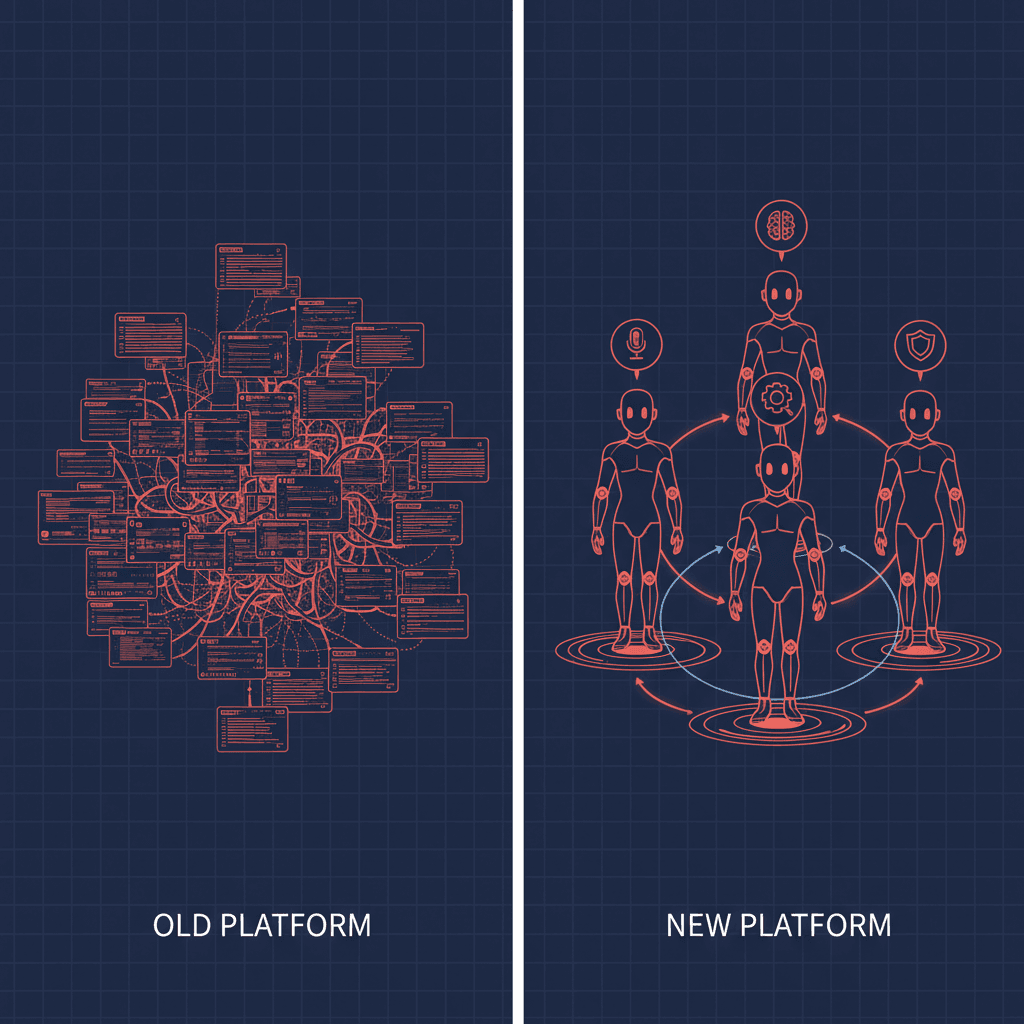
Adobe Sensei was the previous AI brand. It powered features like predictive audiences, automated image tagging, and content recommendations. Sensei was genuinely useful, but it was an assistant layer — AI capabilities embedded inside existing products to help humans make faster decisions within the same dashboard-centric workflow.
CX Enterprise Coworker is architecturally different in every way that matters.
| Capability | Adobe Sensei (2016-2025) | CX Enterprise Coworker (2026+) |
|---|---|---|
| AI type | Feature-level ML models embedded in products | Persistent, goal-oriented AI agents |
| Persistence | Stateless — runs when invoked | Always-on — runs continuously, learns from outcomes |
| Scope | Single product (e.g., Analytics, Target) | Cross-product orchestration across entire CX stack |
| Interaction model | Human reviews AI suggestion in dashboard | Coworker creates plan, executes after approval, monitors results |
| Pricing | Bundled into per-seat subscription | Credit-based / outcome-based pricing |
| Architecture | Proprietary ML APIs | Open standards (MCP, Agent2Agent protocol) |
| Learning | Model retrained periodically by Adobe | Learns from each campaign cycle autonomously |
| Third-party integration | Limited to Adobe ecosystem | Reference architectures for Copilot, ChatGPT, Claude, Gemini |
The jump from Sensei to Coworker is the jump from autocomplete to autonomous execution. Sensei suggested what you might want to do. Coworker does it, tells you what it did, and adjusts based on whether it worked.
What this means for marketing teams#
If you run marketing at an enterprise that uses Adobe, your operating model is about to change. The shift isn't gradual. Adobe is telling you directly: the platform you've been using for a decade is being restructured around agents that do the work your team currently does manually.
The campaign execution cycle compresses. Today, launching a cross-sell campaign involves a planner, a data analyst pulling segments, a creative team building assets, a media buyer setting up channels, and a performance marketer monitoring results. With CX Enterprise Coworker, you define the goal and the Coworker assembles the plan, pulls segments via Audience Agent, routes creative requests through the content pipeline, activates across channels, and monitors performance — asking for human approval at defined checkpoints.
Headcount ratios change. Adobe isn't saying this explicitly, but the math is obvious. If an AI agent can orchestrate what previously required a coordinator, a data analyst, and a junior strategist, the team that needed eight people now needs four. The remaining four handle strategy, creative direction, and relationship management — the work agents can't do yet. This mirrors the broader pattern of AI agents restructuring workforce ratios across industries.
The martech stack consolidates. Adobe is positioning CX Enterprise as the layer that absorbs functionality from point solutions. If the Coworker can handle audience segmentation, journey orchestration, A/B testing, and performance monitoring through its agent network, the justification for separate tools doing each of those things weakens. This is the agent-replaces-SaaS-subscriptions thesis playing out inside the largest martech platform on the market.
What this means for agencies#
The agency impact is more nuanced. Adobe isn't cutting agencies out — it's reshaping how they plug in.
Under the new "Agency System of Record" model, Workfront becomes a shared operational layer connecting brands directly with agency partners. Both sides see the same workflows, assets, and project data. Leading global agencies — dentsu, Havas, Omnicom, Publicis, Stagwell, and WPP — are already standardizing on CX Enterprise.
But the subtext is clear. If the Coworker handles campaign orchestration, audience assembly, and performance monitoring, what's left for a mid-market agency that primarily provided execution services? The answer: strategic differentiation and creative capability. Agencies that were primarily execution shops — assembling segments, setting up campaigns, pulling reports — are staring at the same displacement pattern that hit middle management at Amazon. The work they did is becoming the work agents do.
Agencies that bring genuine strategic insight, proprietary data, or creative capabilities that agents can't replicate will be fine. Agencies that were selling labor hours for campaign setup will need to find a different value proposition.
The enterprise vs. small business gap just widened (again)#
Here's where Adobe's announcement gets uncomfortable for smaller companies.
CX Enterprise is enterprise software priced for enterprises. The outcome-based pricing model might sound progressive, but the minimum spend required to access a persistent Coworker with full agent orchestration capabilities is going to be well north of what a 20-person company can justify. Adobe's partner ecosystem — AWS, Microsoft, NVIDIA, Google Cloud, Anthropic, OpenAI — reads like a list of vendors that don't sell to small businesses.
This creates a familiar pattern. Enterprises get autonomous AI agents managing their entire CX operation. Small businesses get... a ChatGPT subscription and a prayer.
The gap doesn't have to stay this way. The core capability Adobe is selling — persistent agents that learn from outcomes, orchestrate across tools, and execute multi-step workflows — isn't exclusive to platforms that cost six figures annually. The same architectural pattern works at smaller scale, with open-source agent frameworks and managed platforms that commoditize the infrastructure layer.
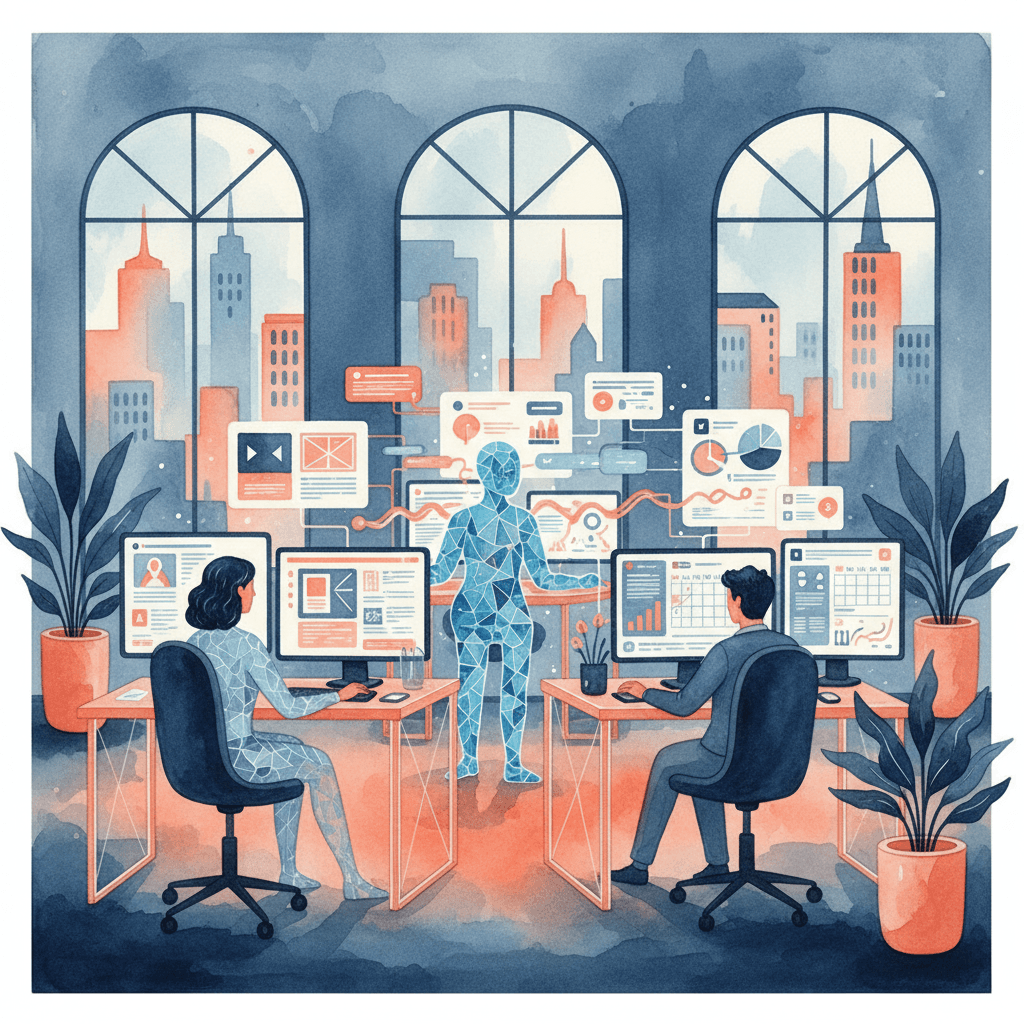
A solo marketer running a personal AI agent through Telegram that handles competitor monitoring, content scheduling, lead follow-ups, and performance summaries is using the same conceptual architecture Adobe just spent billions building. The difference is scale, not capability.
The bigger signal#
Adobe's move is confirmation of something that has been building across enterprise software for the past year. The dashboard era is ending. The seat-license era is ending. The model where software presents information for humans to act on is being replaced by software that acts, learns, and improves autonomously.
When a $26 billion company restructures its second-largest product line around AI agents and shifts from seat-based to outcome-based pricing, it's not a feature release. It's a structural admission that the old model doesn't work anymore.
For marketers: learn to manage agents, not just campaigns. The skill that matters now is defining clear objectives that an AI system can optimize against, not manually pulling levers inside a dashboard.
For agencies: differentiate on strategy and creativity or get automated. The execution layer is now infrastructure, not a service.
For small businesses: the same agentic architecture Adobe is deploying for Fortune 500 companies is available to you at a fraction of the cost. You don't need CX Enterprise. You need a persistent AI agent that understands your business, runs autonomously, and gets smarter over time. RapidClaw deploys exactly that kind of agent — accessible via Telegram, learning from every interaction, and handling the marketing coordination work that Adobe just proved requires AI, not humans.
Frequently asked questions#
What is Adobe CX Enterprise?#
Adobe CX Enterprise is the replacement for Adobe Experience Cloud, announced at Adobe Summit 2026 on April 20. It's an AI-first platform that merges creative and marketing capabilities under a single agent-based architecture. Instead of separate dashboard-centric products, CX Enterprise uses purpose-built AI agents coordinated by a persistent "Coworker" agent that translates business goals into multi-step campaigns. More than 1,770 customers are already entitled to use its AI agents through a credit-based pricing model.
What are Adobe's AI Coworkers?#
Adobe CX Enterprise Coworkers are persistent, goal-oriented AI agents that orchestrate other specialized agents across the marketing stack. Unlike simpler task agents that execute a single function and return, Coworkers run continuously, learn from campaign outcomes, and can be triggered by data signals or schedules. They coordinate audience segmentation, creative production, channel activation, and performance monitoring toward defined business objectives, requesting human approval at configurable checkpoints.
How does Adobe CX Enterprise pricing work?#
Adobe is shifting from per-seat subscription pricing to outcome-based pricing for CX Enterprise. Instead of paying for the number of humans who log into the platform, customers pay based on the value produced — such as the number of campaigns completed by AI agents. Adobe has also introduced a credit-based model for individual AI agent usage, with 1,770+ customers already entitled to use agents under this model.
Will Adobe CX Enterprise replace marketing teams?#
CX Enterprise won't eliminate marketing teams, but it will change their composition. The platform automates campaign orchestration, audience assembly, and performance monitoring — work currently done by coordinators, data analysts, and junior strategists. The roles that remain are strategic: defining business objectives, creative direction, brand strategy, and relationship management. Adobe's own partner announcements show agencies restructuring around strategy and creative differentiation rather than execution services.
How is CX Enterprise different from Adobe Sensei?#
Adobe Sensei was a feature-level AI layer embedded inside existing products — it provided suggestions and predictions within dashboard-centric workflows. CX Enterprise Coworker is architecturally different: it's a persistent, always-on agent that runs continuously, learns from outcomes, orchestrates multiple specialized agents, and executes multi-step campaigns autonomously. Sensei enhanced human workflows. Coworker replaces them for routine marketing operations, while supporting open standards like MCP and Agent2Agent protocol for third-party interoperability.
Can small businesses access similar AI agent capabilities?#
Yes. The core capabilities Adobe is commercializing — persistent agents, workflow orchestration, outcome-based learning — are available through open-source frameworks and managed agent platforms at a fraction of the enterprise cost. Platforms like RapidClaw deploy persistent AI agents accessible via Telegram that handle marketing coordination, competitor monitoring, content scheduling, and daily briefings for under $50/month, using the same architectural patterns that power CX Enterprise at enterprise scale.
Give the busywork to an agent that remembers you
RapidClaw deploys your personal AI agent to Telegram & Discord in 60 seconds — it learns your world, briefs you every morning, and gets smarter every day. Credits included, no API keys, no servers.
Get started — from $19/moRelated Posts

An AI Agent Just Ran a $100 Million Fundraise
Lyzr let an AI agent named SivaClaw manage its entire $100M Series B — fielding 130+ investors, drafting memos, closing the round without a single Sand Hill Road meeting. Here's what that actually proves about enterprise trust in agents.

42% of Companies Abandoned Their AI Agent Projects Last Year. They All Made the Same 3 Mistakes.
AI agent project abandonment jumped from 17% to 42% in one year. The pattern is identical: over-scoping, no feedback loop, and treating agents like software instead of employees.

88% of Companies Already Had an AI Agent Security Incident. Most Can't Trace What Happened.
Gravitee survey: 88% of enterprises had an AI agent security incident. 82% of execs feel confident their policies work. The audit trail gap is the real crisis.
Stay in the loop
New use cases, product updates, and guides. No spam.