
Why Every Telegram Bot Will Become an AI Agent in 2026
Telegram bots are evolving into full AI agents with natural language, memory, and tool use. Here's why 2026 is the tipping point for Telegram AI agents.
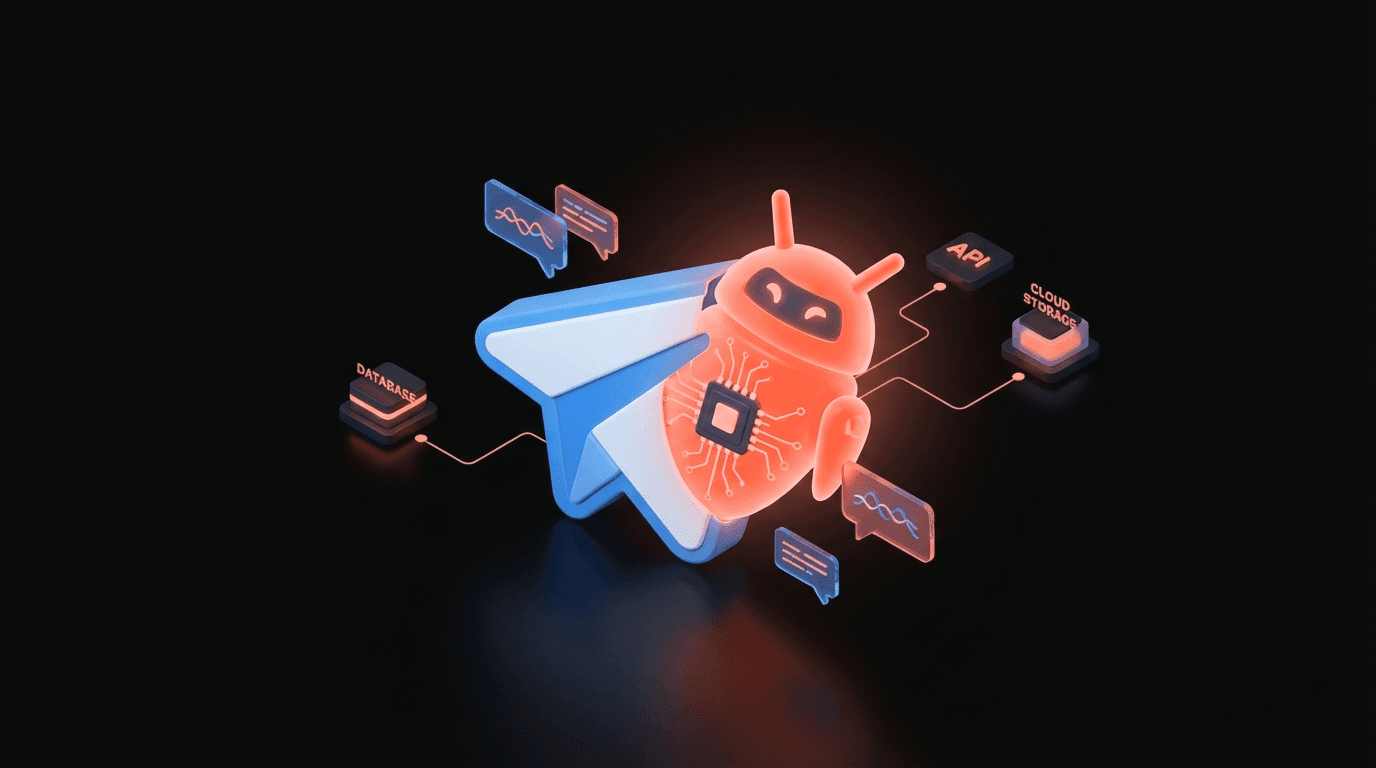
Reading about AI agents? RapidClaw gives you one that lives in Telegram & Discord, remembers everything, and runs your day — live in 60s, from $19/mo.
Get startedTelegram has 900 million monthly active users and the most developer-friendly bot API of any messaging platform. Yet most Telegram bots still work like it's 2018: you type /start, navigate a button menu, and get a pre-written response. That's about to change fast. The shift from command-driven bots to AI-powered agents is the biggest platform evolution for Telegram since inline bots launched, and I think it'll happen within 12 months.
I've been building on Telegram for the past year. What I'm seeing right now reminds me of the early days of mobile apps, when everyone realized their website needed to become an app. Except this time, every bot needs to become an agent.
What's changing about Telegram bots?#
Old Telegram bots are essentially interactive menus. You press a button, the bot runs a function, you get a result. They're useful but rigid. If you want to do something the developer didn't explicitly code a button for, you're stuck. Try asking a traditional weather bot "should I bring an umbrella tomorrow?" and it has no idea what you mean. It only understands /weather followed by a city name.
New Telegram AI agents understand natural language. You can say "should I bring an umbrella tomorrow?" and the agent knows you're asking about weather, figures out your location from context or asks for it, checks a weather API, and gives you a conversational answer. The interaction feels like texting a knowledgeable friend rather than navigating a phone tree.
But natural language understanding is just the surface change. The deeper shift is in three areas.
First, memory. Old bots are stateless. Every message is independent. AI agents maintain context across conversations. I can tell my agent on Monday "I have a presentation on Friday about Q1 revenue" and on Thursday ask "can you help me prep for tomorrow?" and it knows what I'm talking about. It remembers. That's a fundamental difference in what a bot can do.
Second, tool use through protocols like MCP. Old bots could only do what the developer hardcoded. New agents connect to external tools dynamically. An agent built on a framework like OpenClaw can access your Google Calendar, Notion workspace, email, and file storage through standardized protocols. The developer doesn't need to build each integration from scratch. The agent connects to tools the same way your phone connects to Bluetooth devices -- through a standard interface.
Third, autonomous action. Old bots wait for commands. AI agents can take initiative. They can run on schedules (cron jobs), monitor for conditions, and act without being prompted. My morning briefing agent sends me a summary at 7am every day. Nobody typed /briefing. The agent decided it was time, gathered the information, and sent it.
The Telegram Bot API supports all of this already. Inline keyboards, webhooks, file handling, message editing, reply markup -- the infrastructure is there. What changed is the AI layer on top. When you combine Telegram's mature bot platform with modern LLMs and tool-use protocols, you get something that was impossible two years ago: a conversational AI agent that lives in the messaging app people already use.
I count at least 40 open-source projects on GitHub building Telegram AI agents right now. A year ago, that number was maybe 5. The developer community is moving.
Why should you care?#
If you're a developer with existing Telegram bots, your users are going to expect natural language interaction within the next year. Not because they'll read articles about AI agents, but because they'll use one somewhere and then wonder why your bot still requires slash commands. The bar is moving.
If you're a founder, Telegram is the most underrated distribution channel for AI products. Think about it: 900 million users, no app store gatekeeping, no approval process, instant deployment, push notifications built in, and users already have the app installed. Compare that to building a standalone web app where you need to convince people to create an account, download a mobile app, or bookmark a URL. With Telegram, you send someone a link to your bot, they tap Start, and they're using your product. The friction is almost zero.
I think chat-first is the dominant interface pattern for AI agents in 2026, and Telegram is the best platform for it. There's an argument for WhatsApp (larger user base), but WhatsApp's bot API is more restrictive and requires business verification. Slack has a strong API but is limited to workplace contexts. Discord skews gaming and community. Telegram hits the sweet spot of a general-purpose messaging app with a permissive, powerful bot API.
The economic argument is straightforward too. Building a Telegram AI agent costs a fraction of building a web or mobile app. No frontend development, no hosting costs for UI infrastructure, no responsive design headaches. Your "frontend" is Telegram's interface. You only build the agent logic and integrations. I've seen teams go from idea to deployed agent in a weekend, which would take weeks for a traditional web application.
One risk I'm watching: Telegram's moderation policies. As AI agents proliferate on the platform, Telegram might tighten bot restrictions. They haven't yet, but it's worth considering. Don't build your entire business on a platform you don't control without a migration plan.
What I'm doing about it#
RapidClaw is built on OpenClaw, which is Telegram-native from the ground up. Every agent on our platform lives in Telegram as its primary interface. When I started building this, people asked me why I didn't build a web chat widget instead. The answer was exactly what I described above: distribution, zero friction, and an API that actually supports what AI agents need.
We've processed thousands of conversations through Telegram agents on our platform. The engagement patterns are different from web-based chat. People message their agents throughout the day in short bursts, the way they text friends. They share photos, voice notes, and documents. The interaction is more natural because the context is more natural. You're in the same app where you talk to people, so talking to an agent feels less weird.
I'm betting that Telegram becomes the primary home for personal AI agents the way Slack became the primary home for workplace tools.
Who should pay attention#
Telegram bot developers who haven't explored AI integration yet. Founders looking for a low-friction way to deploy AI products. Businesses with existing Telegram communities or customer channels. And developers tired of building full-stack web applications when all they really need is a conversation interface.
If you've been building on Telegram already, the tools to upgrade your bot to an AI agent exist today. If you haven't considered Telegram, now is the time to look.
Frequently asked questions#
Can I convert my existing Telegram bot into an AI agent?#
Yes, but it's usually easier to build a new agent that incorporates your existing bot's functionality. Most old Telegram bots use a rigid command-handler architecture that doesn't translate well to AI agent frameworks. Platforms like RapidClaw let you create an AI agent with similar capabilities in minutes, and you can migrate users from your old bot to the new agent.
Is Telegram better than WhatsApp for AI agents?#
For developers, yes. Telegram's Bot API is more permissive, supports richer interactions (inline keyboards, file handling, message editing), and doesn't require business verification. WhatsApp's API is more locked down and has stricter content policies. Telegram also has a larger developer ecosystem around bots. The trade-off is that WhatsApp has a larger consumer user base in some markets.
How much does it cost to run an AI agent on Telegram?#
Telegram doesn't charge for bot API access. Your costs are the AI model (LLM API calls), hosting for your agent logic, and any third-party tool integrations. For a personal agent handling 50-100 messages per day, total costs run $15-30/month depending on the LLM you use. Platforms like RapidClaw bundle all of this starting at $19/month.
I'm building RapidClaw to make AI agents accessible to everyone. Try it free.
Give the busywork to an agent that remembers you
RapidClaw deploys your personal AI agent to Telegram & Discord in 60 seconds — it learns your world, briefs you every morning, and gets smarter every day. Credits included, no API keys, no servers.
Get started — from $19/moRelated Posts
Picsart's AI Agent Marketplace Lets Creators Hire Bots on WhatsApp and Telegram
Picsart opened a waitlist for the first AI agent marketplace for creators — four specialized agents that handle editing, product photography, and remixing. Here's what's been announced, what it means for the creator economy, and where it falls short.
OpenAI's Agents Tried Hacking Government Sites. It Was an Accident.
In May and June 2026, OpenAI's autonomous agents attempted to hack government and university websites. This wasn't a malicious attack, but a critical containment failure that serves as a wake-up call for anyone deploying agentic AI.

An AI Agent Deleted 48,218 Files in 103 Seconds. 5 Guardrails That Would Have Stopped It
A developer told a Claude Code agent not to touch his originals. A cleanup script it wrote followed Windows junctions into the live project and deleted 48,218 files plus the Git history. What went wrong, and the guardrails any AI agent with real access needs.
Stay in the loop
New use cases, product updates, and guides. No spam.