
Android Just Got Official AI Agent Tools — What Developers Need to Know
Google's Android team announced official tools for building AI agents on Android. The @AndroidDev post pulled 246 likes. Here's what the tools do, why they matter, and what comes next.
Reading about AI agents? RapidClaw gives you one that lives in Telegram & Discord, remembers everything, and runs your day — live in 60s, from $19/mo.
Get startedGoogle's Android team officially released developer tools for building AI agents that run natively on Android devices. Announced on March 20, 2026 via the @AndroidDev account on X, the toolset includes APIs for agent-to-app communication, on-device model integration, and persistent agent state management. This marks the first time a major mobile OS has shipped first-party support for autonomous AI agents.
What did Google actually announce?#
The @AndroidDev post on March 20 outlined three core components. First, an Agent API that lets AI agents interact with Android apps through structured function calls instead of screen scraping or accessibility hacks. Second, on-device model hosting support so agents can run locally without round-tripping to the cloud. Third, a persistent state system that lets agents maintain context across sessions, app switches, and device restarts.
The announcement pulled 246 likes and 35 retweets, strong numbers for a developer-focused account posting technical tooling news. The engagement signals genuine developer interest, not just hype cycle noise.
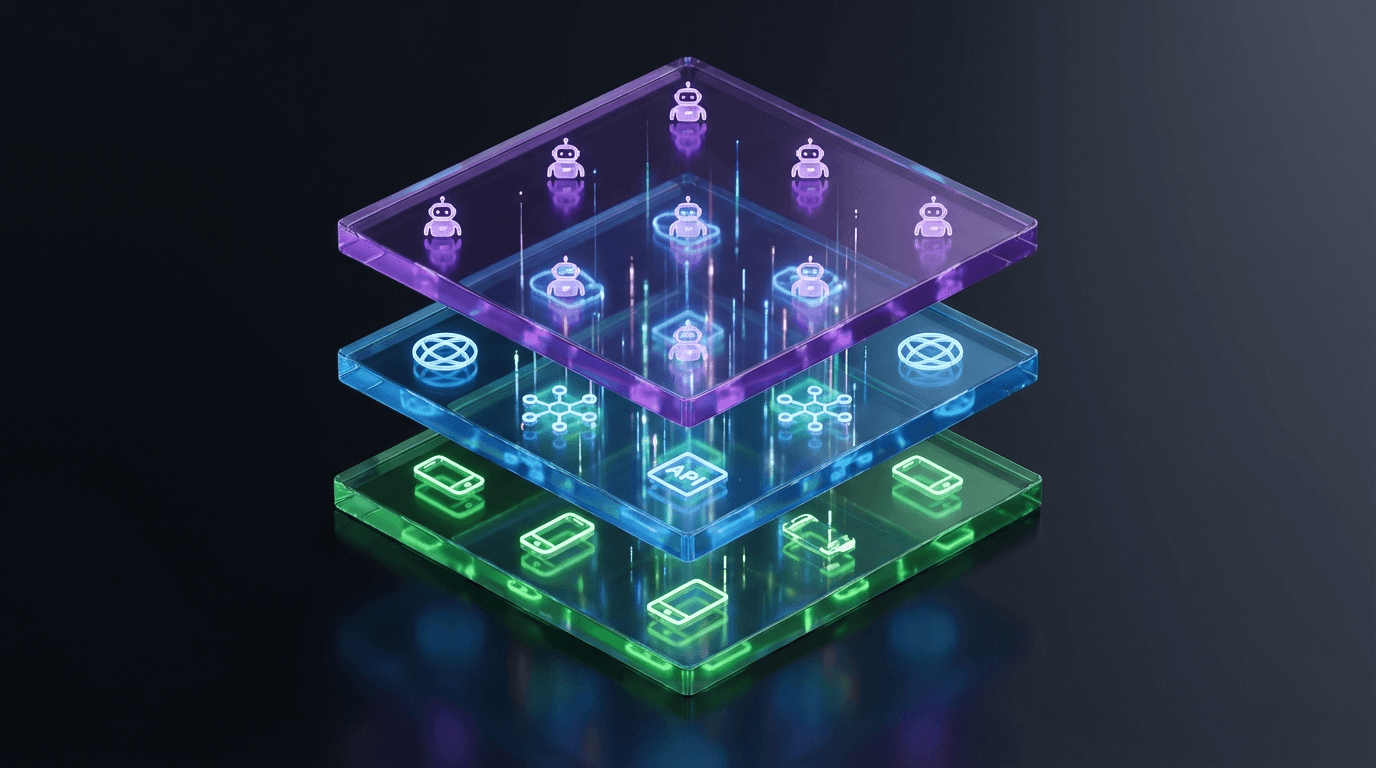
Google had been telegraphing this move. Their earlier MCP and AppFunctions work laid the groundwork by establishing how agents should communicate with mobile applications. The new tools build directly on that foundation, turning experimental protocols into production-ready APIs.
The timing is also notable. This announcement came just days after Jensen Huang's GTC 2026 keynote where he declared OpenClaw the most popular open source project in history. The agent infrastructure layer is solidifying across every major platform simultaneously.
Why native Android agent support matters#
Until now, AI agents on mobile have been hacky. They either used accessibility services to tap buttons like a screen reader, or they ran entirely server-side and pushed notifications to the phone. Neither approach is good. Accessibility-based agents are fragile, slow, and break when UIs change. Server-side agents can't interact with local apps, contacts, calendars, or files.
Native API support fixes both problems. Agents can now call into apps the way apps call into each other, through structured, versioned interfaces. An agent that manages your calendar doesn't need to "see" the calendar UI. It calls the calendar API directly. This is faster, more reliable, and more secure.
The on-device model hosting is equally significant. Running agent logic locally means no data leaves the phone. For 3.3 billion Android users worldwide, many of whom are in regions with expensive or unreliable connectivity, local-first agents aren't a premium feature. They're a requirement.
What developers can build now#
The immediate use cases fall into three categories.
Personal productivity agents that manage schedules, emails, messages, and tasks across apps without manual switching. An agent that reads your morning emails, checks your calendar, and sends a summary to your Telegram or Slack is now buildable with official APIs instead of workarounds.
Business workflow agents that handle field operations, inventory checks, CRM updates, and reporting from mobile devices. For the millions of workers whose primary computing device is a phone, this unlocks agent capabilities that were previously desktop-only.
Accessibility agents that go beyond screen reading to actually operating the phone on behalf of users with motor or cognitive disabilities. The structured API approach means these agents can be precise and reliable rather than fragile.

Early developer reactions on Reddit's r/androiddev have been cautiously positive, with several threads noting that the API design borrows heavily from the Model Context Protocol (MCP) patterns that have become standard in the broader agent ecosystem. This interoperability matters because it means agents built for Android can share tool definitions with agents running on other platforms.
The bigger picture: mobile as agent platform#
Google is making a bet that the phone becomes the primary agent runtime for most people. Not a laptop, not a cloud server, not a dedicated device. The phone. This aligns with usage data. The average Android user spends 4.2 hours per day on their device. If agents live where users already spend their time, adoption friction drops to nearly zero.
The competitive dynamics are also interesting. Apple has been slower to ship agent infrastructure, with Siri's limitations well documented. Samsung announced agentic AI features for the Galaxy S26 but took a more consumer-facing approach. Google is targeting developers directly, which historically has been the more effective strategy for platform adoption. Android's open ecosystem means third-party agent platforms can integrate deeply without the gatekeeping that iOS imposes.
For the broader agent ecosystem, Android's official support validates a key thesis: agents are moving from cloud-only to edge-plus-cloud architectures. The most capable agents will run logic locally for speed and privacy while calling cloud services for heavy inference and data access.
What this means for agent platforms#
Managed agent platforms need to think about mobile distribution. An AI agent that runs on Telegram already works on every Android phone. That's not a coincidence. Messaging platforms are the natural interface layer for agents on mobile because they're already installed, already have notification permissions, and already feel natural for conversational interaction.
RapidClaw agents deployed on Telegram, Discord, or Slack automatically work on Android without any additional integration. The new Android tools create opportunities for deeper native integration down the road, but the messaging-first approach already covers the primary use case: an always-on agent you can talk to from your phone.
Frequently Asked Questions#
Do I need to update my Android phone to use AI agents?#
The new agent tools require Android 15 or later. Google indicated that some features will be backported to Android 14 through Google Play Services updates, but the full API surface requires the latest OS version. Most flagship phones from 2025 onward will be compatible.
Can AI agents access all my apps on Android?#
No. Apps must explicitly opt in by implementing the new Agent API interfaces. Users also grant per-agent permissions, similar to how apps request camera or location access today. Google designed the system with a principle of least privilege, so agents only access what you approve.
How do Android AI agent tools compare to what Apple offers?#
Apple has not shipped equivalent first-party agent tools as of March 2026. Siri Shortcuts and App Intents provide some automation capability, but nothing approaching the autonomous, persistent agent model that Android now supports. Apple is reportedly working on deeper agent integration for iOS 20, but no official announcement has been made.
RapidClaw deploys always-on AI agents to Telegram, Discord, and Slack. Works on every Android phone. No code, no servers, 60 seconds to launch. Try it free.
Give the busywork to an agent that remembers you
RapidClaw deploys your personal AI agent to Telegram & Discord in 60 seconds — it learns your world, briefs you every morning, and gets smarter every day. Credits included, no API keys, no servers.
Get started — from $19/moRelated Posts
Google's MCP for Android Means Your Phone Apps Talk to AI Now
Google announced MCP for Android via AppFunctions, letting AI agents discover and control your phone apps. Here's why this changes mobile AI workflows.

An AI Agent Deleted 48,218 Files in 103 Seconds. 5 Guardrails That Would Have Stopped It
A developer told a Claude Code agent not to touch his originals. A cleanup script it wrote followed Windows junctions into the live project and deleted 48,218 files plus the Git history. What went wrong, and the guardrails any AI agent with real access needs.
Google Gemma 4 Runs AI Agents on Your Phone. The Cloud Just Lost Its Moat.
Google's Gemma 4 runs autonomous AI agents on phones and Raspberry Pis. No API calls. No cloud bill. No latency. The implications for edge AI are massive.
Stay in the loop
New use cases, product updates, and guides. No spam.