
ClawGo's $249 Handheld: The First Hardware Built Exclusively for AI Agents
ClawGo shipped a $249 handheld built exclusively for running OpenClaw AI agents. Is dedicated agent hardware the future, or the next Humane AI Pin?
Reading about AI agents? RapidClaw gives you one that lives in Telegram & Discord, remembers everything, and runs your day — live in 60s, from $19/mo.
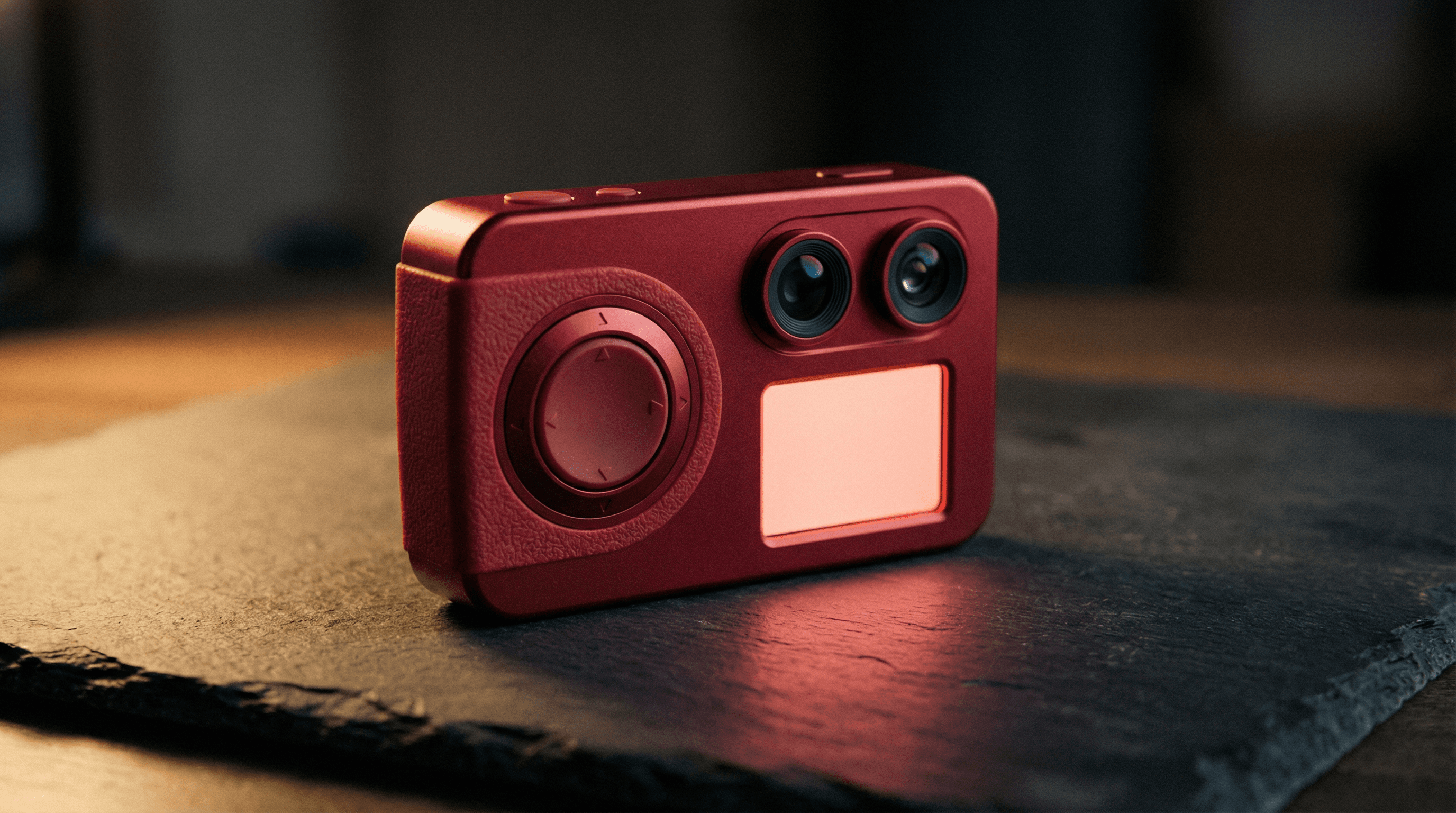
Get startedA small team out of Beckenham, UK just started shipping pre-orders for a $249 handheld device that does exactly one thing: run an OpenClaw AI agent. No app store. No social media feeds. No notification hell. Just your personal agent, in your pocket, with its own screen, cameras, mics, connectivity, and storage.
ClawGo opened pre-orders on March 25, 2026, with units shipping in April. And the timing is not accidental -- they are racing to beat OpenAI's $6.5 billion Jony Ive device and Apple's rumored AI Pin for 2027.
What is ClawGo?#
ClawGo is a purpose-built handheld companion device for AI agents. It ships with OpenClaw pre-installed, a curated skills library, and a Save-and-Restore system that lets you back up and migrate your agent's entire state. The hardware specs: a 3.54-inch display, dual cameras, dual microphones, Wi-Fi and SIM connectivity, and on-board storage. Think of it as a dedicated runtime environment for your agent that happens to fit in your hand.
The team's core argument is simple: "AI agents shouldn't require a developer's mindset to use." They are betting that a single-purpose device removes enough friction to bring non-technical users into the agent economy. No Docker. No terminal. No config files. Power it on, your agent is running.
Their most quoted line captures the philosophy: "The model is the brain. But the runtime is the workplace. And ClawGo is the body."
The AI hardware landscape in 2026#
ClawGo is entering a market littered with ambitious failures and massive bets. Here is where things stand:
| Device | Price | Status | Approach |
|---|---|---|---|
| ClawGo | $249 | Shipping April 2026 | Dedicated OpenClaw handheld |
| OpenAI + Jony Ive | TBD (backed by $6.5B) | H2 2026 launch | Proprietary AI-first device |
| Apple AI Pin | TBD | 2027 target, 20M units planned | Wearable, Siri-based |
| ClawBox | EUR 299 | Available | Desktop agent box |
| NVIDIA DGX Spark | $4,699 | Available | Desktop AI workstation |
| Rabbit R1 | $199 | Launched 2024, struggling | LAM-based assistant |
| Humane AI Pin | $699 | Failed | Wearable projector |
| RapidClaw | $29/month | Live | Cloud-hosted OpenClaw via Telegram |
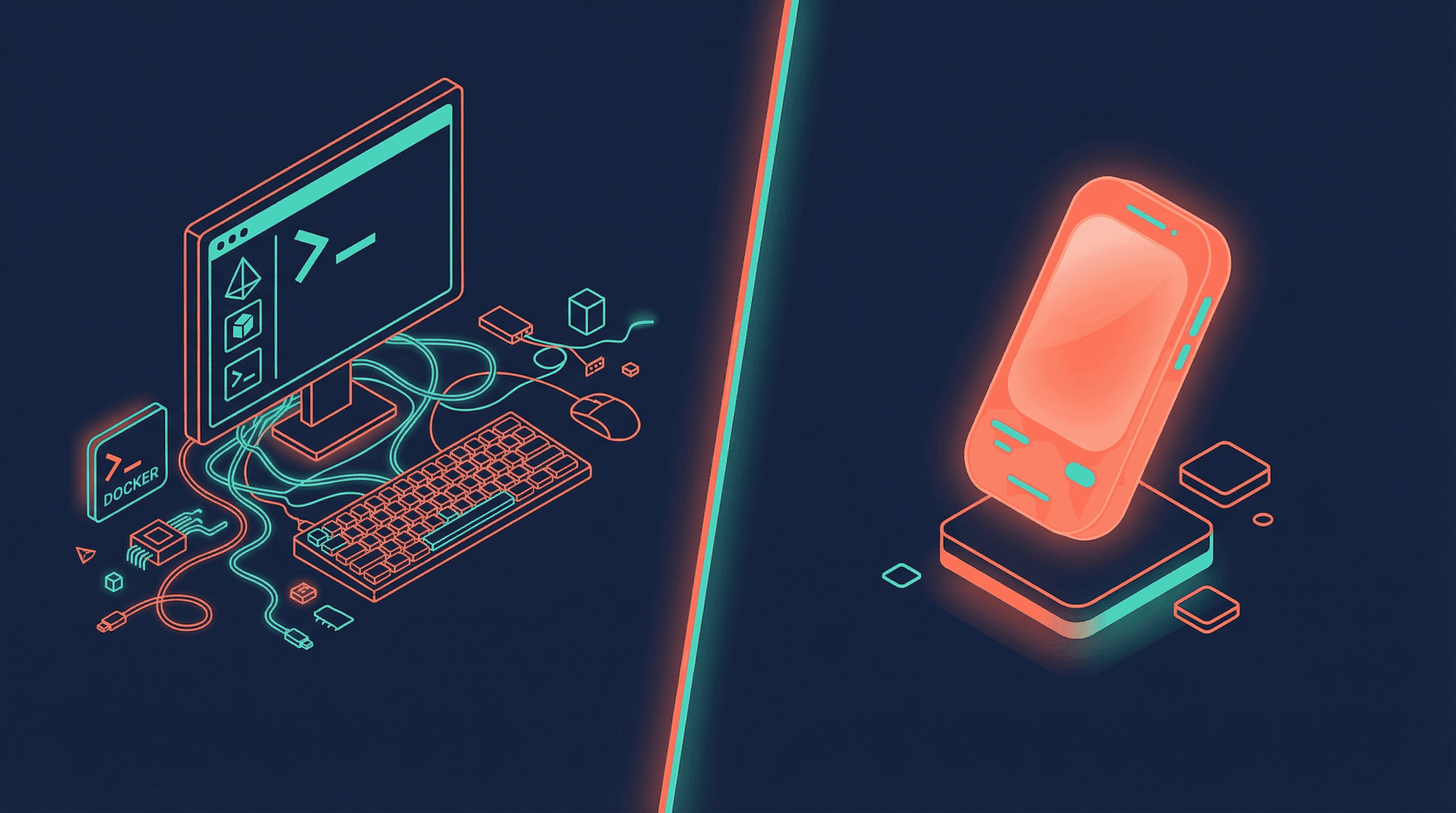
The Humane AI Pin is the cautionary tale everyone references. At $699 plus a monthly subscription, it promised a screenless future and delivered a laggy projector that couldn't reliably send a text message. Rabbit R1 fared slightly better at $199 but struggled to justify its existence next to the phone already in your pocket. Both devices tried to replace the smartphone. Both failed because the smartphone is absurdly good at being a general-purpose computer.
ClawGo is making a different bet. It is not trying to replace your phone. It is trying to be the thing your agent runs on when your phone is doing everything else.
The bull case for dedicated agent hardware#
There are legitimate reasons to want your AI agent on a separate device. I will take them seriously before poking holes.
Air-gap security. An agent running on a dedicated device with its own storage is not sharing memory space with your banking app, your password manager, or your browser session. For users handling sensitive business data -- client contracts, financial models, medical records -- this isolation matters. You can hand someone the ClawGo to interact with your agent without handing them access to your entire digital life.
Always-on persistence. Your phone dies, your laptop sleeps, your Wi-Fi drops during a Zoom call. A dedicated agent device with SIM connectivity and its own battery maintains continuity. The agent keeps monitoring, keeps processing, keeps being available. The Save-and-Restore system means if the device does die, you can recover the full agent state on a replacement unit.
Cognitive separation. This one is underrated. When your agent lives inside Telegram or Slack, it competes with every other notification for your attention. A dedicated device creates a physical boundary -- "this is where I interact with my agent" -- that can improve the quality of human-agent interaction. Same reason some people buy a Kindle instead of reading on their iPad. The constraint is the feature.
Simplicity for non-technical users. This is ClawGo's strongest argument. Self-hosting OpenClaw requires Docker, command-line comfort, networking knowledge, and ongoing maintenance. ClawGo removes all of that. Power on, agent is running. For the person who wants an AI agent but does not know what a container is, this is a real unlock.
The bear case: everything that could go wrong#
Now the hard questions.
The Glassholes problem. Google Glass taught us that wearable AI triggers a visceral privacy reaction in bystanders. ClawGo has dual cameras. Carrying a camera-equipped AI device in meetings, at dinner, in public -- this will generate friction. The team will need to navigate social acceptability carefully, or the cameras become a liability rather than a feature.
Phone redundancy. The most dangerous question for any dedicated device: "Can't my phone do this?" The answer, increasingly, is yes. OpenClaw runs on Android. It runs on any device with a browser and a Telegram account. The phone you already own, already charge, already carry -- it can host an agent today. ClawGo needs to prove the delta between "agent on your phone" and "agent on its own device" is worth $249.
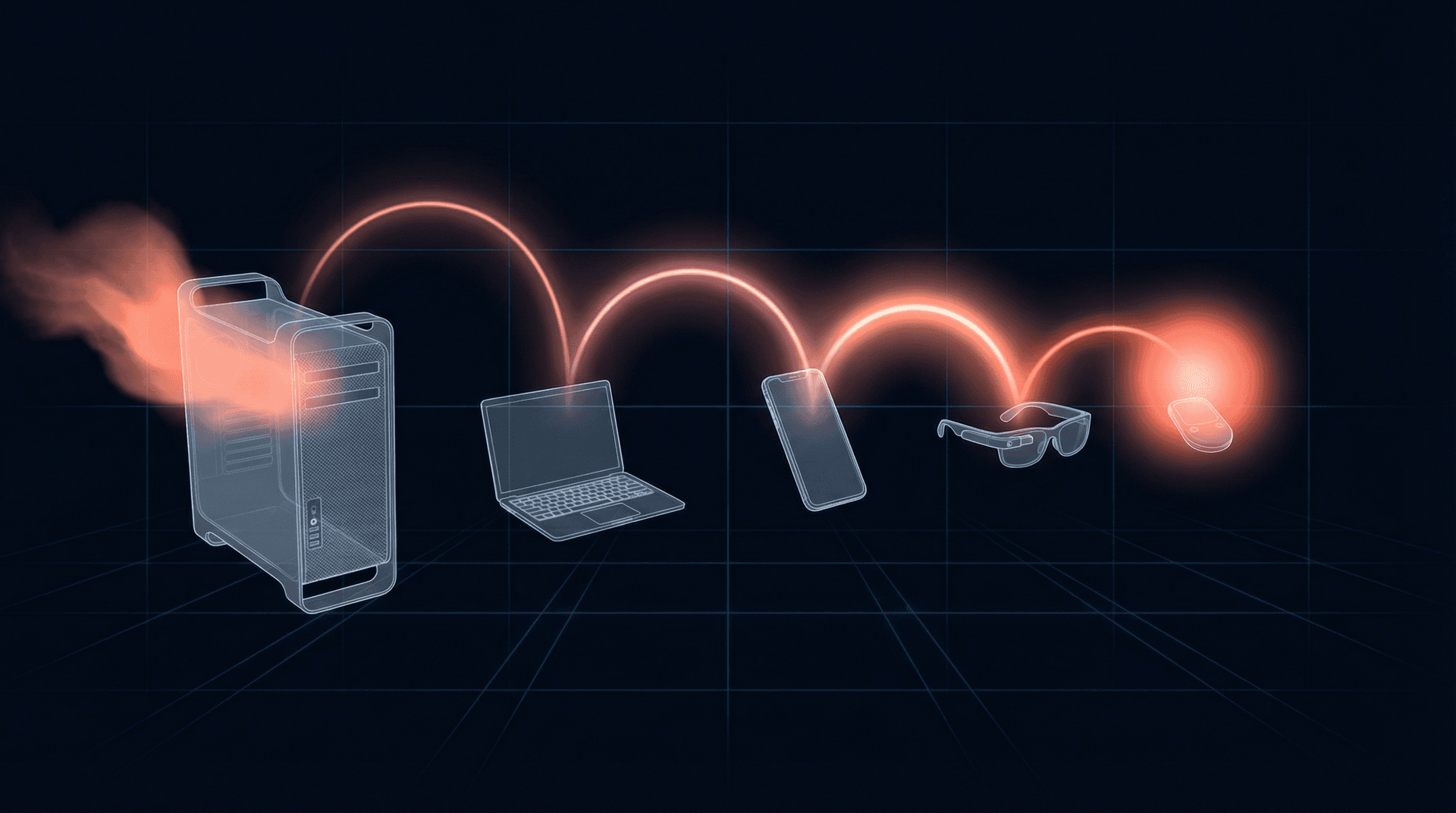
Software eats hardware. AI moves at software speed. Model capabilities improve monthly. New agent frameworks ship weekly. Hardware ships on 12-18 month cycles. By the time ClawGo revises its chipset, the software landscape will have shifted three or four times. The device risks becoming a snapshot of agent capabilities frozen in silicon. The Save-and-Restore system helps here, but it cannot upgrade the underlying compute.
Price sensitivity in a market with free alternatives. At $249, ClawGo is cheap by hardware standards but expensive compared to free. You can run OpenClaw on an old laptop for $0. You can set up a personal AI agent on Telegram in 60 seconds with a managed service. The curated skills library and simplified UX need to justify that $249 against a universe of free-to-cheap alternatives.
Battery life and carrying burden. Every device you add to your daily carry needs to earn its pocket space. AirPods earned it. Your phone earned it. Your watch earned it. A dedicated agent handheld is asking for real estate in your pocket or bag, and it needs to deliver enough value to survive the "do I really need to bring this?" test every morning.
The market says this is going somewhere#
Skepticism aside, the numbers tell a clear story. The AI wearables market hit $394.53 million in 2026 and is projected to reach $748.98 million by 2032. The broader AI agents market sits at $10.91 billion in 2026 and is heading to $182.97 billion by 2033 -- a 49.6% compound annual growth rate.
Those numbers explain why OpenAI paid $6.5 billion for Jony Ive's design studio. They explain why Apple is planning 20 million AI Pin units. They explain why a small team in Beckenham thinks a $249 handheld has a shot.
The question is not whether dedicated agent hardware will exist. It will. The question is whether the market wants it at this price point, in this form factor, with this level of openness.
How ClawGo compares to RapidClaw#
Both ClawGo and RapidClaw solve the same fundamental problem: making OpenClaw accessible to people who do not want to self-host. But the approaches diverge completely.
ClawGo is a hardware play. You buy a device, you own it, your agent runs locally. Your data stays on the device. You are responsible for keeping it charged, updated, and not lost. The upside is ownership and privacy. The downside is everything that comes with owning hardware -- depreciation, physical damage risk, the inevitable moment when the next version makes yours obsolete.
RapidClaw is a software play. Your agent runs on managed cloud infrastructure, accessible through Telegram on any device you already own. No hardware to buy, lose, or charge. The upside is zero maintenance and instant access from anywhere. The downside is that your agent's runtime lives on someone else's server.
| ClawGo | RapidClaw | |
|---|---|---|
| Cost | $249 one-time | $29/month |
| Access device | Dedicated handheld | Any phone/laptop via Telegram |
| Data location | On-device | Managed cloud |
| Setup time | Power on | ~60 seconds |
| Maintenance | User-managed firmware | Fully managed |
| Offline capable | Yes (with SIM/Wi-Fi) | Requires internet |
| Agent portability | Save-and-Restore to new device | Always available, any device |
| Skills library | Curated on-device | ClawFlows + custom skills |
| Break-even vs RapidClaw | ~8.5 months | N/A |
The break-even math: at $29/month, you hit $249 in about 8.5 months. If you plan to run an agent for years and want local data control, ClawGo's one-time cost makes financial sense. If you want flexibility, zero hardware risk, and access from any device, the subscription model wins.
Honestly, these are not competitors. They are different distribution strategies for the same underlying technology. Some people will want both -- ClawGo for private, on-device agent work, and a cloud-hosted agent for everything else.
What this means for the agent economy#
ClawGo matters less as a product and more as a signal. A venture-backed team designed, manufactured, and shipped a piece of consumer electronics built exclusively for AI agents. Not a phone with agent features bolted on. Not a smart speaker with an agent mode. A device that exists for no other reason than to run your agent.
That only happens when the market is large enough and the use case is clear enough to justify the risk. The DGX Spark at $4,699 proved enterprises will pay for dedicated agent infrastructure. ClawGo at $249 is testing whether consumers will too.
The next 12 months will be telling. If ClawGo sells through its first production run, expect fast followers. If it stumbles, it will join Humane in the "too early" category -- and the market will wait for Apple or OpenAI to nail the form factor with their billions.
Either way, the era of agents running only inside chat windows is ending. They are getting their own hardware. The question is just who builds the hardware that sticks.
FAQ#
Is ClawGo worth $249?#
It depends on your use case. If you are non-technical, want local data control, and plan to use an AI agent daily for 9+ months, the one-time cost undercuts a monthly subscription. If you are comfortable with Telegram-based agents or self-hosting, $249 is hard to justify for what a $0-29/month solution already provides. The curated skills library and simplified UX are the real value adds -- the hardware specs alone would not justify it.
Can ClawGo replace my phone for AI tasks?#
No, and it is not trying to. ClawGo is a companion device, not a phone replacement. It does not run apps, make calls, or browse the web. It runs your OpenClaw agent with cameras, mics, and connectivity to support agent tasks. Think of it as a dedicated workspace for your agent, not a general-purpose computer.
How does ClawGo handle software updates?#
ClawGo ships with a Save-and-Restore system that preserves your agent's full state -- skills, memory, configuration -- across updates and even device migrations. Firmware and OpenClaw updates are delivered over Wi-Fi. The risk is that hardware constraints may limit which future OpenClaw versions the device can support, similar to how older phones eventually stop receiving OS updates.
What happens if I lose my ClawGo device?#
The Save-and-Restore system is designed for exactly this scenario. If you have been backing up your agent state, you can restore it to a replacement ClawGo device. Your agent's memory, skills, and configuration survive the hardware loss. What you lose is any data that had not been backed up since your last sync. For comparison, a cloud-hosted agent on RapidClaw has no single point of hardware failure -- your agent keeps running regardless of what happens to your devices.
Is dedicated agent hardware the future or a fad?#
The market data suggests it is the future -- $748.98 million in AI wearables by 2032, $182.97 billion in AI agents by 2033. But "dedicated hardware" does not necessarily mean a standalone handheld. It could mean agent-optimized chips inside your existing phone, agent coprocessors in your laptop, or agent appliances in your home. ClawGo is testing one form factor. The market will decide if it is the right one.
Want an AI agent running today without buying new hardware? RapidClaw deploys your personal OpenClaw agent in 60 seconds, accessible through Telegram on any device you already own. Plans start at $29/month.
Give the busywork to an agent that remembers you
RapidClaw deploys your personal AI agent to Telegram & Discord in 60 seconds — it learns your world, briefs you every morning, and gets smarter every day. Credits included, no API keys, no servers.
Get started — from $19/moRelated Posts

OpenClaw 2026.4.9 'Dreaming' Feature: Your AI Agent Now Consolidates Memory While You Sleep
OpenClaw v2026.4.9 introduces Dreaming — a memory consolidation system where your AI agent replays the day's interactions overnight and decides what to remember permanently. Here's how it works.

Brave Search Just Became the Default Brain for 700,000 AI Agents. Google Wasn't Even in the Running.
700,000 OpenClaw agents now use Brave Search by default. Not Google. Not Bing. The search engine market is being rewritten by AI agents.
OpenClaw's 9 CVEs in 4 Days: The Security Reckoning the Agent Ecosystem Wasn't Ready For
Between March 18-21, nine CVEs dropped for OpenClaw in four days. One scored CVSS 9.9. Over 220,000 internet-facing instances were exposed. Here's what happened.
Stay in the loop
New use cases, product updates, and guides. No spam.