
Brave Search Just Became the Default Brain for 700,000 AI Agents. Google Wasn't Even in the Running.
700,000 OpenClaw agents now use Brave Search by default. Not Google. Not Bing. The search engine market is being rewritten by AI agents.

Reading about AI agents? RapidClaw gives you one that lives in Telegram & Discord, remembers everything, and runs your day — live in 60s, from $19/mo.
Get startedSeven hundred thousand OpenClaw users just signed up for Brave Search API as their default search provider. Not Google. Not Bing. Not some scrappy startup nobody's heard of. Brave — the privacy browser company that most people still associate with blocking ads — is now the search backbone for the largest open-source AI agent framework on the planet.
This didn't happen by accident. It happened because Google made itself unavailable, Bing is phasing out its API, and Brave built the only independent global search index that actually wants to be used by machines. When OpenClaw added openclaw configure --section web and needed a default search provider, there was exactly one credible option.
That's a sentence worth sitting with. The world's dominant search engine — 90% market share, $300 billion in annual ad revenue — was not a viable candidate to power AI agent search. The market that Google built and monopolized for two decades just handed its next chapter to a company with 100 million monthly users and a fundamentally different business model.

What is Brave Search and why are AI agents using it?#
Brave Search is an independent search engine with its own web index — not a reskin of Google or Bing results. It processes 1.6 billion queries per month, serves 15 million AI-generated answers daily, and runs across 42 million daily active users. It reached $100 million in annualized revenue in 2026, making it one of the few search engines besides Google that's actually profitable.
What makes Brave relevant to AI agents is its API. While Google restricts programmatic access to its search results and charges premium rates through a limited Custom Search API, and while Microsoft is actively phasing out the Bing Search API, Brave offers a straightforward search API at $5 per 1,000 requests with a $5 monthly free credit. For an AI agent that needs to query the web 50 times a day, that's effectively free.
But the API pricing is table stakes. The real draw is what Brave built on top of it: MCP (Model Context Protocol) servers for LangChain, LlamaIndex, CrewAI, and Claude Desktop. A dedicated LLM Context API designed for RAG pipelines. SOC 2 Type II certification for enterprise deployments. Brave didn't just make search available to agents — it built the integration layer that makes search native to agent workflows.
This is why OpenClaw chose Brave as the first and default search provider. When you run openclaw configure --section web, Brave Search is what you get. Not because of a deal or a partnership announcement, but because it was the only provider that treated agent integration as a first-class use case.
The search provider landscape for AI agents#
Here's the reality that most people outside the agent ecosystem haven't grasped yet: the search API market is in a state of quiet collapse for anyone building autonomous software.
| Provider | Independent Index | Agent-Focused API | MCP Integration | Pricing (per 1K requests) | Status |
|---|---|---|---|---|---|
| Google Custom Search | Yes | No | No | $5 (100 queries/day free, then paid) | Restricted, rate-limited |
| Bing Search API | No (shared with Microsoft) | Partial | No | Being phased out | Sunsetting |
| Brave Search API | Yes | Yes | Yes (LangChain, LlamaIndex, CrewAI, Claude) | $5 ($5/mo free credit) | Active, expanding |
| Perplexity | Relies on Brave + others | Yes | Limited | Usage-based | Consumer-focused |
| You.com | Partial | Yes | Limited | Tiered | Pivoting to agents |
Google's Custom Search JSON API gives you 100 free queries per day. After that, it's $5 per 1,000 queries — but with aggressive rate limits, restricted result types, and terms of service that make large-scale agent use legally murky. Google has no incentive to make its search results cheaply available to agents that bypass ads entirely.
Bing's API, which powered most AI search integrations for the past three years, is being deprecated. Microsoft is consolidating around Copilot and its own agent ecosystem. Third-party access to Bing results is becoming unreliable and expensive.
That leaves Brave as the only independent global search index with an API that's actively courting AI agent developers. It's not that Brave won a competition. It's that Brave was the only one that showed up.
Why Google can't compete for agent search#
This is the structural argument, and it's the one that matters most.
Google's business model is advertising. Ninety percent of Alphabet's revenue comes from showing ads alongside search results. Every query that flows through Google's index is monetized by placing sponsored links in front of human eyes. When an AI agent queries Google, there are no human eyes. There's no ad impression. There's no click. The query costs Google money to serve and generates zero revenue.
The numbers make the problem visceral. According to research from Heroic Rankings, 60-68% of Google searches already end without a click — the user finds their answer in the snippet, the knowledge panel, or the featured result. Google's own AI Overviews, now appearing on 58% of queries, push the zero-click rate to 83%. The search engine is cannibalizing its own monetization model.
Now layer agent search on top. Gartner predicted that traditional search engine volume would drop 25% by 2026, driven by AI chatbots and virtual agents replacing direct search. That prediction is playing out. Agent-driven queries — where software, not a person, initiates the search — are projected to account for 25% of all web queries by end of 2026. AI referral sessions are growing 527% year-over-year according to Stan Ventures.
Google can't offer cheap, unrestricted API access to its search index because every agent query is a query that doesn't generate ad revenue. Opening the floodgates to agents would accelerate the collapse of the advertising model that funds the entire operation. So Google restricts API access, and agents go elsewhere.
Brave doesn't have this problem. Brave's revenue comes from a mix of premium subscriptions, privacy-preserving ads (that users opt into), and now API fees. An agent query that pays $0.005 is pure revenue for Brave. The same query is a pure cost for Google. The incentive structures are pointing in opposite directions, and they're not going to converge.
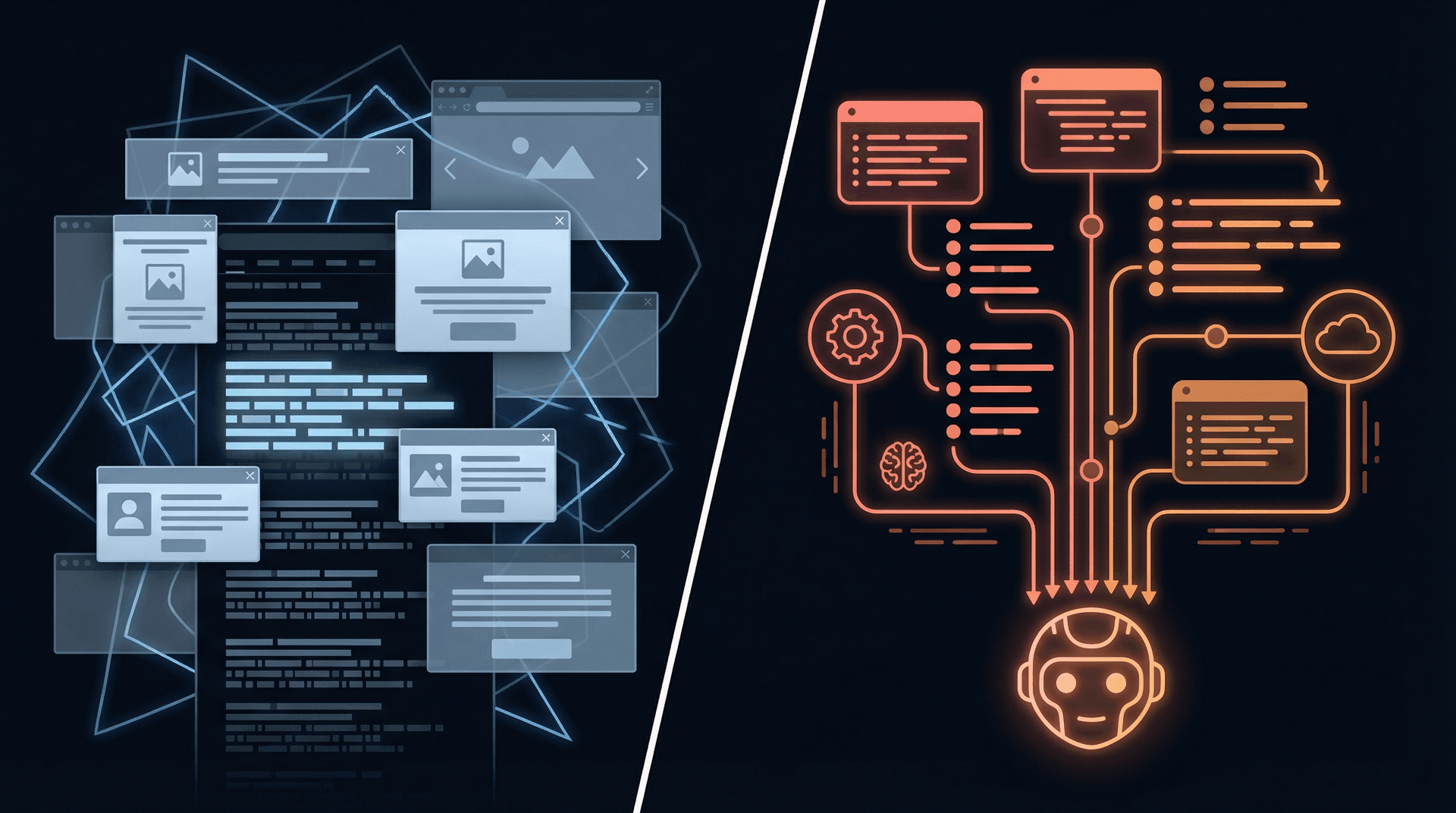
The shift from "search and click" to "command and execute"#
What's happening to search isn't a tweak. It's a category change. The twenty-year era of "type query, scan results, click link" is giving way to "tell agent what you need, agent finds it, agent acts on it." The human never sees the search results page. The concept of a search results page becomes meaningless.
ChatGPT alone captures 60.7% of AI search traffic according to Sedestral's 2026 market share analysis. Perplexity, which uses Brave's index as a primary data source, handles another significant chunk. Both bypass Google entirely for their core search functionality.
The OpenClaw ecosystem accelerates this further. When 700,000 agents have Brave Search pre-configured, every task those agents perform that requires web information — research, price comparison, news monitoring, competitive analysis — routes through Brave, not Google. These aren't one-off queries. These are always-on agents running 24/7 research workflows, processing dozens of searches per day each.
The volume implications are staggering. If each of those 700,000 agents averages just 20 search queries per day, that's 14 million daily queries flowing through Brave's index from OpenClaw alone. Brave's current total is 1.6 billion per month, or roughly 53 million per day. OpenClaw agents could represent a 25% increase in Brave's total query volume within months.
This is what the "search and click" to "command and execute" transition looks like in practice. It's not theoretical. It's not a Gartner prediction about 2028. It's happening now, and it's happening through infrastructure decisions like OpenClaw's default search configuration.
What Brave built that nobody noticed#
While the tech press covered Brave's browser growth and privacy features, the company was quietly building an entire agent infrastructure stack. The pieces are worth enumerating because they explain why Brave was ready for this moment.
LLM Context API. Launched specifically for RAG (Retrieval-Augmented Generation) pipelines, this API returns search results pre-formatted for LLM consumption. Instead of raw HTML that an agent needs to parse, it delivers structured context that slots directly into a prompt. This is the difference between giving an agent a newspaper and giving it a briefing document.
MCP servers. Brave built Model Context Protocol integrations for the four frameworks that matter most: LangChain, LlamaIndex, CrewAI, and Claude Desktop. MCP is becoming the standard way agents connect to external tools, and Brave invested in native support before most search providers even acknowledged agents as a use case.
SOC 2 Type II certification. Enterprise deployments need compliance guarantees. Brave got certified, which removes a procurement blocker that keeps privacy-focused tools out of corporate environments.
Powers top-10 LLMs. Brave's search index already powers most of the top-10 large language models, including Meta's and Perplexity's. When your index is already the one that LLMs query for grounding, becoming the default for agents is a natural extension.

None of this happened overnight. Brave has been building toward agent-native search for at least two years. The OpenClaw default is the culmination of that strategy, not its beginning.
This is the beginning of the end for ad-supported search#
I'll state this plainly because the implication is too important to hedge: the ad-supported search model is entering terminal decline.
The math is unforgiving. As agents handle a growing share of information retrieval, the number of human eyeballs seeing search result pages decreases. As zero-click searches increase (already 60-68% and rising), even the queries that humans do make generate less ad revenue. As AI Overviews push zero-click rates to 83%, Google is actively accelerating its own revenue erosion.
Google isn't going to collapse tomorrow. It has $300 billion in annual revenue, a dominant position in display and video advertising, and a cloud business growing fast. But the core search advertising franchise — the profit engine that funds everything else — is being structurally undermined by the same AI technology Google is racing to deploy.
The irony is sharp. Google invested more in AI than almost any company on earth. That AI is now the primary force pulling queries away from the ad-supported search model. Every AI Overview that answers a question without a click, every agent that queries Brave instead of Google, every person who stopped using ChatGPT and built an AI agent instead — they're all reducing the surface area of the advertising model.
Brave's position in this transition is genuinely strong. It doesn't need to kill Google. It just needs to be the default search provider for the agent economy, which is growing at 527% year-over-year while traditional search volume contracts. The OpenClaw default puts Brave at the center of that growth curve.
What this means if you're building with agents#
If you're deploying AI agents today — whether through OpenClaw, through a browser-native agent stack, or through a managed platform — search infrastructure matters more than you think.
Your agent's quality is directly proportional to the quality of information it can access. A research agent with access to a comprehensive, independent search index produces better results than one scraping cached snippets from a rate-limited API. A monitoring agent that can query 100 sources per hour without hitting throttle limits is fundamentally more capable than one that can only check 10.
Brave Search being the OpenClaw default means that every RapidClaw instance ships with this capability pre-configured. You deploy an agent, connect it to Telegram, and it can search the web through Brave's index from minute one. No API key setup. No billing configuration. No wrestling with Google's quota system. The model-agnostic architecture that makes OpenClaw powerful now extends to search: your agent picks the best model for reasoning and the best index for information retrieval.
The search engine wars of the 2000s were fought over browser defaults. The search wars of the 2020s are being fought over agent defaults. And the first decisive battle just went to Brave.
RapidClaw instances come with Brave Search pre-configured out of the box. Deploy an AI agent in 60 seconds with web search that works from day one — no API keys, no rate limit headaches. Get started at RapidClaw.
Frequently Asked Questions#
What is Brave Search's role in the AI agent ecosystem?#
Brave Search is the first and default search provider integrated into OpenClaw, the largest open-source AI agent framework. It provides an API at $5 per 1,000 requests with a $5 monthly free credit, MCP server integrations for major agent frameworks (LangChain, LlamaIndex, CrewAI, Claude Desktop), and a dedicated LLM Context API for RAG pipelines. Its independent search index processes 1.6 billion queries per month and already powers most top-10 LLMs including Meta's and Perplexity's.
Why wasn't Google chosen as the default search for OpenClaw agents?#
Google restricts programmatic API access with aggressive rate limits, and its business model creates a structural conflict. Every agent query costs Google money to serve but generates zero ad revenue — there are no human eyes to see sponsored results. Brave, by contrast, earns direct revenue from API fees, making agent queries profitable rather than parasitic. Google's Custom Search API caps free usage at 100 queries per day, which is insufficient for always-on agents that may execute dozens of searches hourly.
How many searches will OpenClaw agents route through Brave?#
If each of the 700,000 OpenClaw agents with Brave Search configured averages 20 queries per day, that's 14 million daily searches — roughly a 25% increase to Brave's current daily query volume of approximately 53 million. As agents take on more web-connected tasks (research, monitoring, competitive analysis), this number will grow. Agent-driven queries are projected to account for 25% of all web queries by end of 2026.
Is Brave Search as comprehensive as Google Search?#
Brave operates its own independent web index, not a proxy of Google or Bing results. With 1.6 billion queries per month and 100 million monthly active users, it's the largest independent search index outside of Google and Bing. For agent use cases — where structured data retrieval matters more than visual result page presentation — Brave's index provides comparable coverage. Its LLM Context API specifically formats results for machine consumption, which is something Google's API doesn't offer.
Will ad-supported search survive the agent era?#
The structural trend is clear: as agents handle more information retrieval, fewer human eyeballs see search result pages. Zero-click searches already account for 60-68% of Google queries, AI Overviews push that to 83%, and AI referral sessions are growing 527% year-over-year. Google won't disappear — it has $300 billion in annual revenue and diversified businesses — but the core search advertising franchise faces sustained margin compression as the query mix shifts from human-initiated to agent-initiated.
Does RapidClaw include Brave Search by default?#
Yes. Every RapidClaw instance ships with Brave Search pre-configured as the default web search provider. You don't need to obtain a separate API key, set up billing, or configure anything. Your agent can search the web from the moment it's deployed. This is part of RapidClaw's approach to removing friction from agent deployment — the search layer works out of the box alongside model routing, Telegram/Discord integration, and the memory flywheel.
Give the busywork to an agent that remembers you
RapidClaw deploys your personal AI agent to Telegram & Discord in 60 seconds — it learns your world, briefs you every morning, and gets smarter every day. Credits included, no API keys, no servers.
Get started — from $19/moRelated Posts

OpenClaw 2026.4.9 'Dreaming' Feature: Your AI Agent Now Consolidates Memory While You Sleep
OpenClaw v2026.4.9 introduces Dreaming — a memory consolidation system where your AI agent replays the day's interactions overnight and decides what to remember permanently. Here's how it works.

OpenClaw's 9 CVEs in 4 Days: The Security Reckoning the Agent Ecosystem Wasn't Ready For
Between March 18-21, nine CVEs dropped for OpenClaw in four days. One scored CVSS 9.9. Over 220,000 internet-facing instances were exposed. Here's what happened.

ClawGo's $249 Handheld: The First Hardware Built Exclusively for AI Agents
ClawGo shipped a $249 handheld built exclusively for running OpenClaw AI agents. Is dedicated agent hardware the future, or the next Humane AI Pin?
Stay in the loop
New use cases, product updates, and guides. No spam.