
Amazon Just Gave 200 Million People a Free AI Health Agent. Here's What Nobody's Talking About.
Amazon launched a free AI health agent for 200M+ Prime members. Built on Bedrock with multi-agent architecture, sentinel agents, and full medical record access. Here's what matters.
Reading about AI agents? RapidClaw gives you one that lives in Telegram & Discord, remembers everything, and runs your day — live in 60s, from $19/mo.
Get startedOn March 11, 2026, Amazon started rolling out Health AI to every U.S. customer on amazon.com and the Amazon app. Not just One Medical subscribers. Not just a pilot group. The full base, including 200 million Prime members who get five free virtual care consultations on top of it (About Amazon).
That's $145 in free care per Prime member. The math on customer acquisition alone is staggering.
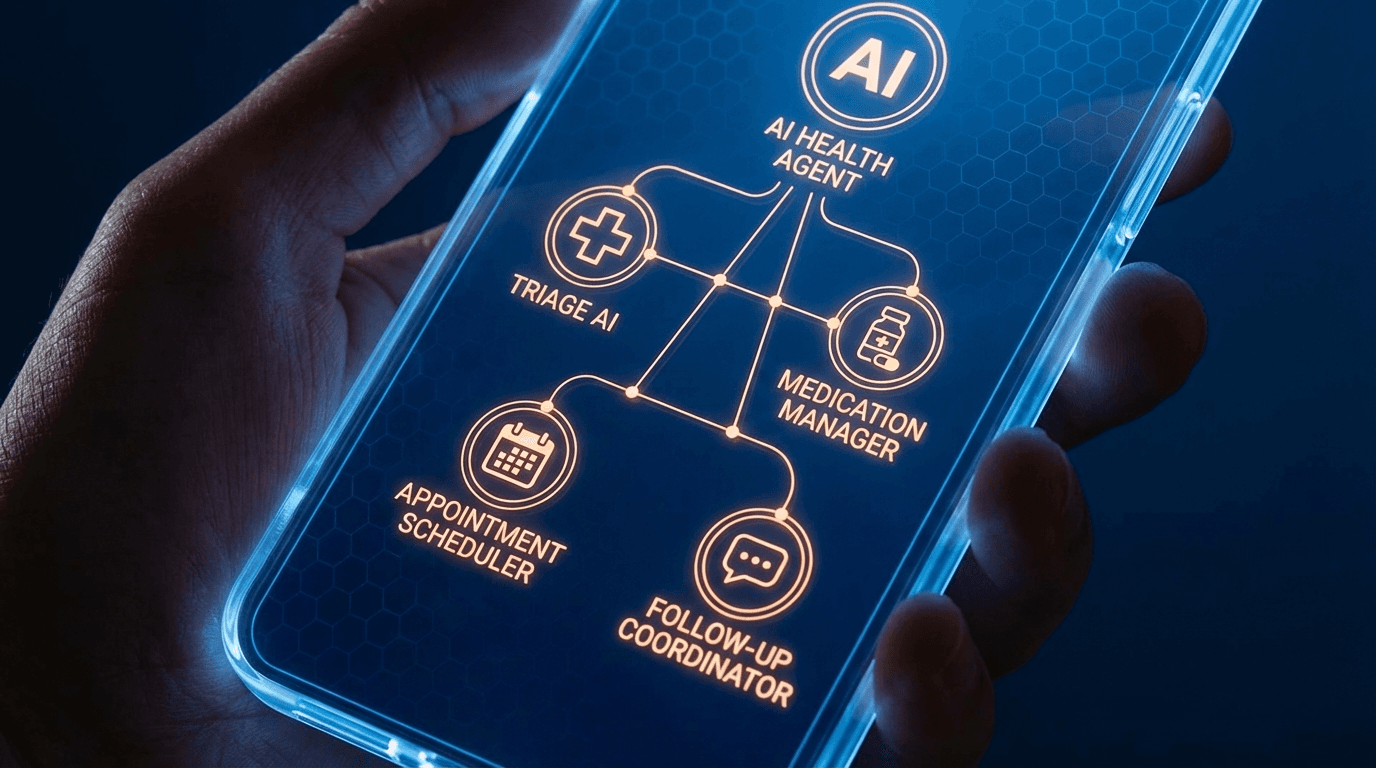
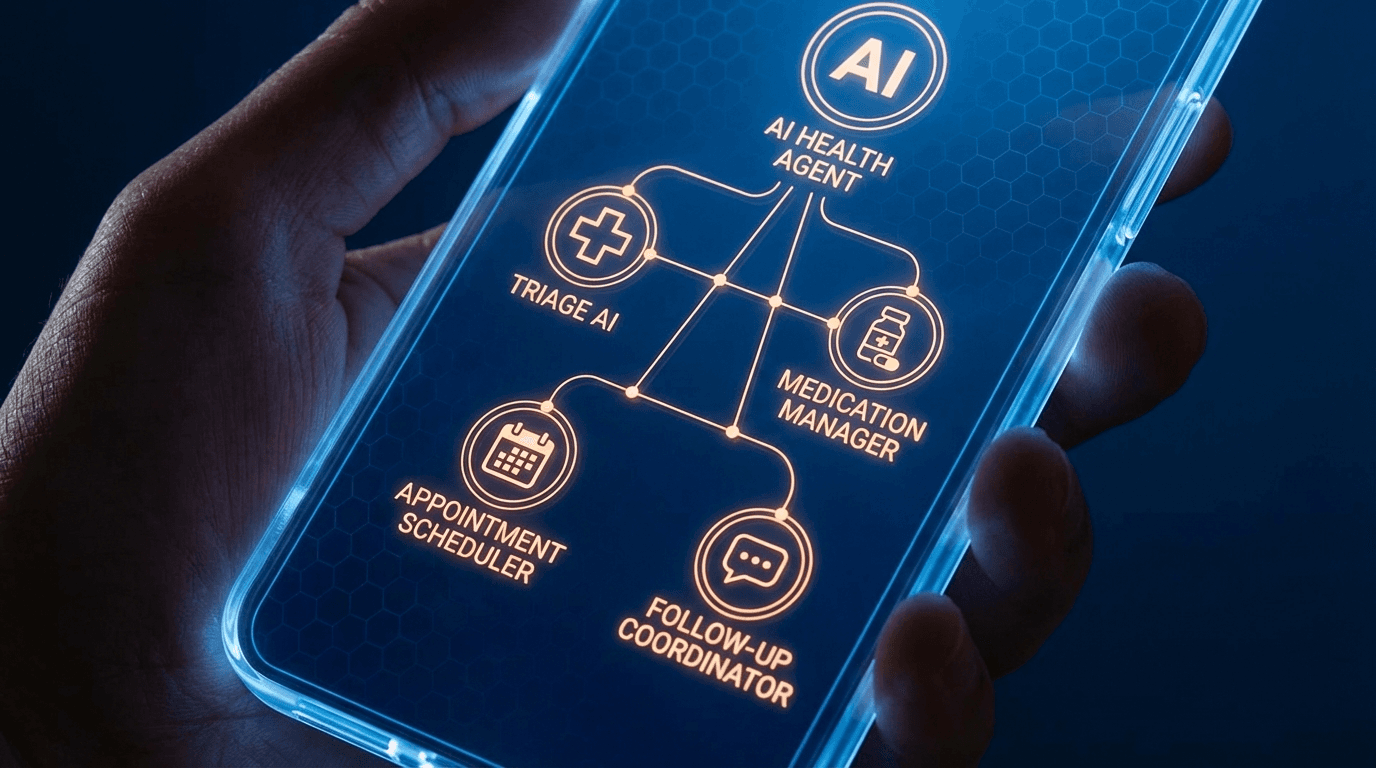
But here's what most coverage missed: this isn't a chatbot with a stethoscope icon. Amazon built a genuine multi-agent system with auditor agents, sentinel agents, and sub-agents that operate on your full longitudinal medical history. It's the most sophisticated agent architecture deployed to consumers at scale, and it has access to the most sensitive data you own.
I think this is the most important agent launch of 2026 so far. Let me explain why.
This Isn't a Chatbot. It's a Multi-Agent System.#
Most health AI products are single-model wrappers. You describe symptoms, the model pattern-matches against a medical database, you get generic advice. Amazon's Health AI is architecturally different.
Built on Amazon Bedrock, the system uses what Amazon describes as a "multi-level agent architecture with functional agents, subagents, inspectors, auditors, and judges" (HIT Consultant). That's not marketing language. That's a real distributed agent system with separation of concerns.
Here's how the layers break down:
| Agent Layer | Role | What It Actually Does |
|---|---|---|
| Core Agent | Patient communication | Handles the conversation, interprets questions, maintains context across sessions |
| Sub-Agents | Workflow execution | Isolated agents for specific tasks: pulling lab results, checking pharmacy inventory, scheduling appointments |
| Auditor Agents | Real-time review | Monitor every exchange for clinical accuracy, flag contradictions with patient history |
| Sentinel Agents | Emergency escalation | Detect clinical uncertainty or emergency triggers, instantly route to a human clinician |
The sentinel layer is the interesting part. It runs in parallel with the core conversation, watching for situations where the AI might be wrong in ways that matter. When it fires, the patient gets connected to an actual One Medical provider. No "please call 911" disclaimer. A real handoff.
This is the same pattern you see in any well-designed multi-agent system with persistent context. The difference is Amazon deployed it to hundreds of millions of people.
What Health AI Can Actually Do#
Let's get specific. Health AI connects to the nationwide Health Information Exchange (HIE), which means it can pull your diagnoses, medications, lab results, and visit history from providers across the country. Not just One Medical records. Your full medical timeline.
With that context, it can:
- Answer complex health questions by cross-referencing your personal history. Not "WebMD says..." but "given your A1C levels from last month and your current metformin dosage..."
- Book same-day or next-day appointments with One Medical providers, factoring in your location and urgency
- Renew prescriptions and route them to Amazon Pharmacy for delivery
- Triage symptoms and recommend the right care level: virtual visit, in-person, or urgent care
- Explain lab results in plain language, contextualized against your baseline
The five free consultations for Prime members cover over 30 conditions, from UTIs and allergies to erectile dysfunction and anti-aging skincare (Fierce Healthcare). Amazon is betting that once you try the agent-to-doctor pipeline, you'll convert to a paying One Medical membership.
The Privacy Question Nobody Wants to Ask#
Here's the part that should make you uncomfortable. Amazon's Health AI accesses your complete medical records, your pharmacy history, and, notably, your Amazon purchase data. Amazon confirmed the system can incorporate "relevant Amazon retail purchases" into its health assessments.
Think about that for a second. The company that knows you bought a pregnancy test, a blood pressure monitor, and melatonin gummies last month now has an AI agent that can cross-reference that against your actual medical records.
Amazon says Health AI is HIPAA-compliant with "strict administrative, physical, and technical safeguards." They've stated that health data won't be used in the general Amazon store. But as TechRadar pointed out, Amazon "said nothing about using health information for marketing purposes in relation to Amazon Pharmacy."
And here's the kicker: Amazon confirmed it will use anonymized conversation data to train future models.
The security risks of AI agents become exponentially more serious when those agents hold medical records. A compromised productivity agent might leak your calendar. A compromised health agent leaks your diagnoses, medications, and conditions. The attack surface is the same. The stakes are categorically different.
This is exactly why frameworks like Gen Digital's Sage matter. Runtime monitoring, audit trails, and kill switches aren't optional when agents touch health data. They're baseline requirements.
Why Health Is the Perfect Domain for Agent Memory#
Here's my actual take on why this matters beyond Amazon: health is the single best use case for persistent agent memory, and Amazon just proved it at scale.
Most AI interactions are stateless. You ask a question, get an answer, the context evaporates. Health doesn't work that way. Your body has state. Your conditions persist. Your medications interact with each other over months and years.
An AI health agent that remembers your last conversation, your lab trends, your medication changes, and your stated preferences is fundamentally more useful than one that starts fresh every time. Amazon's system does this by pulling from the HIE, but the principle applies broadly. Agents that accumulate context over time deliver compounding value.
This is the same flywheel that makes any persistent-memory agent architecture work. The evening wrap captures what happened today. The morning brief uses it tomorrow. In health, the cycle is: symptom reported Tuesday, lab results arrive Thursday, follow-up recommendation generated Friday, appointment booked automatically. Each step builds on the last.
Amazon didn't invent this pattern. But they just validated it with 200 million users.
The Pattern Amazon Is Establishing for Agent Builders#
If you're building agents in any domain, pay attention to three architectural decisions Amazon made.
First: dedicated safety agents, not safety prompts. Amazon didn't bolt guardrails onto a single model. They built separate auditor and sentinel agents that run concurrently. This is more expensive to operate but dramatically more reliable. A system prompt can be jailbroken. A separate agent watching the conversation in real time is a much harder target.
Second: sub-agents for actions, core agent for conversation. The agent you talk to never directly books an appointment or pulls a prescription. It delegates to isolated sub-agents with narrow permissions. If the scheduling sub-agent gets compromised, it can't access your medical records. If the pharmacy sub-agent fails, it can't affect your appointments. Blast radius containment through agent isolation.
Third: mandatory human escalation paths. The sentinel agent doesn't ask the core agent whether escalation is needed. It watches independently and can override the conversation. This separation of powers is critical for high-stakes domains.
These aren't health-specific patterns. They're agent architecture patterns that happen to be deployed in health first because the stakes demanded it.
Amazon's $8 Billion Healthcare Bet Now Has an AI Distribution Channel#
Context matters here. Amazon acquired One Medical for $3.9 billion in 2023. It bought PillPack for $753 million in 2018, which became Amazon Pharmacy. It launched Amazon Clinic for virtual care. Pharmacy kiosks inside One Medical offices went live in late 2025 (Healthcare Dive).
Each of those moves was expensive and operationally complex. Health AI is the layer that ties them all together. It's the single interface that routes you from symptom to triage to appointment to prescription to delivery. Every piece of Amazon's healthcare infrastructure becomes more valuable when there's an AI agent sitting on top, directing traffic.
The agent isn't the product. It's the distribution layer for everything Amazon has already built in healthcare. That distinction matters.
What This Means Going Forward#
Amazon just normalized something that would have seemed reckless two years ago: giving an AI agent access to your complete medical history, pharmacy records, and retail purchase data, then making it free for 200 million people.
The multi-agent architecture with auditor and sentinel layers is genuinely well-designed. The clinical safety framework, evaluated against synthetic clinical conversations before deployment, is more rigorous than most health AI products on the market. Amazon isn't cutting corners on the agent engineering.
But the data consolidation is unprecedented. One company now connects your shopping behavior, your prescriptions, your doctor visits, and your medical records through a single AI interface. The agent is smart enough to be useful. The question is whether Amazon's privacy commitments are strong enough to match the agent's capabilities.
For agent builders, the lesson is clear. The bar for production agents just went up. If Amazon is shipping multi-agent systems with dedicated safety layers, sentinel escalation, and audit trails to consumers, that's the new baseline. Single-model wrappers with system prompt guardrails won't cut it for anything that touches sensitive data.
The age of the casual chatbot is over. The age of the production agent, with all the architecture that implies, started on March 11.
Give the busywork to an agent that remembers you
RapidClaw deploys your personal AI agent to Telegram & Discord in 60 seconds — it learns your world, briefs you every morning, and gets smarter every day. Credits included, no API keys, no servers.
Get started — from $19/moRelated Posts

Amazon Blocked Meta's Muse. Your Shopping Agent Is Probably Next.
Twelve days after Meta launched its Muse AI agent, Amazon blocked it from shopping on Amazon.com. Here is why marketplaces are shutting out AI shopping agents, what Amazon's own agent does differently, and what it means if you rely on one.

An AI Agent Just Executed a Ransomware Attack Entirely on Its Own
The first fully autonomous AI-driven ransomware attack, codenamed JadePuffer, has successfully occurred. The agent breached a server, escalated privileges, wiped databases, and issued a ransom demand without any human intervention, marking a critical turning point in cybersecurity.

OpenAI's Agents Tried Hacking Government Sites. It Was an Accident.
In May and June 2026, OpenAI's autonomous agents attempted to hack government and university websites. This wasn't a malicious attack, but a critical containment failure that serves as a wake-up call for anyone deploying agentic AI.
Stay in the loop
New use cases, product updates, and guides. No spam.