
The White House Wants to Kill State AI Laws. Here's What That Means for Your AI Agents.
The White House told Congress to override every state AI law in America. If you deploy AI agents, this changes your compliance math overnight.

Reading about AI agents? RapidClaw gives you one that lives in Telegram & Discord, remembers everything, and runs your day — live in 60s, from $19/mo.
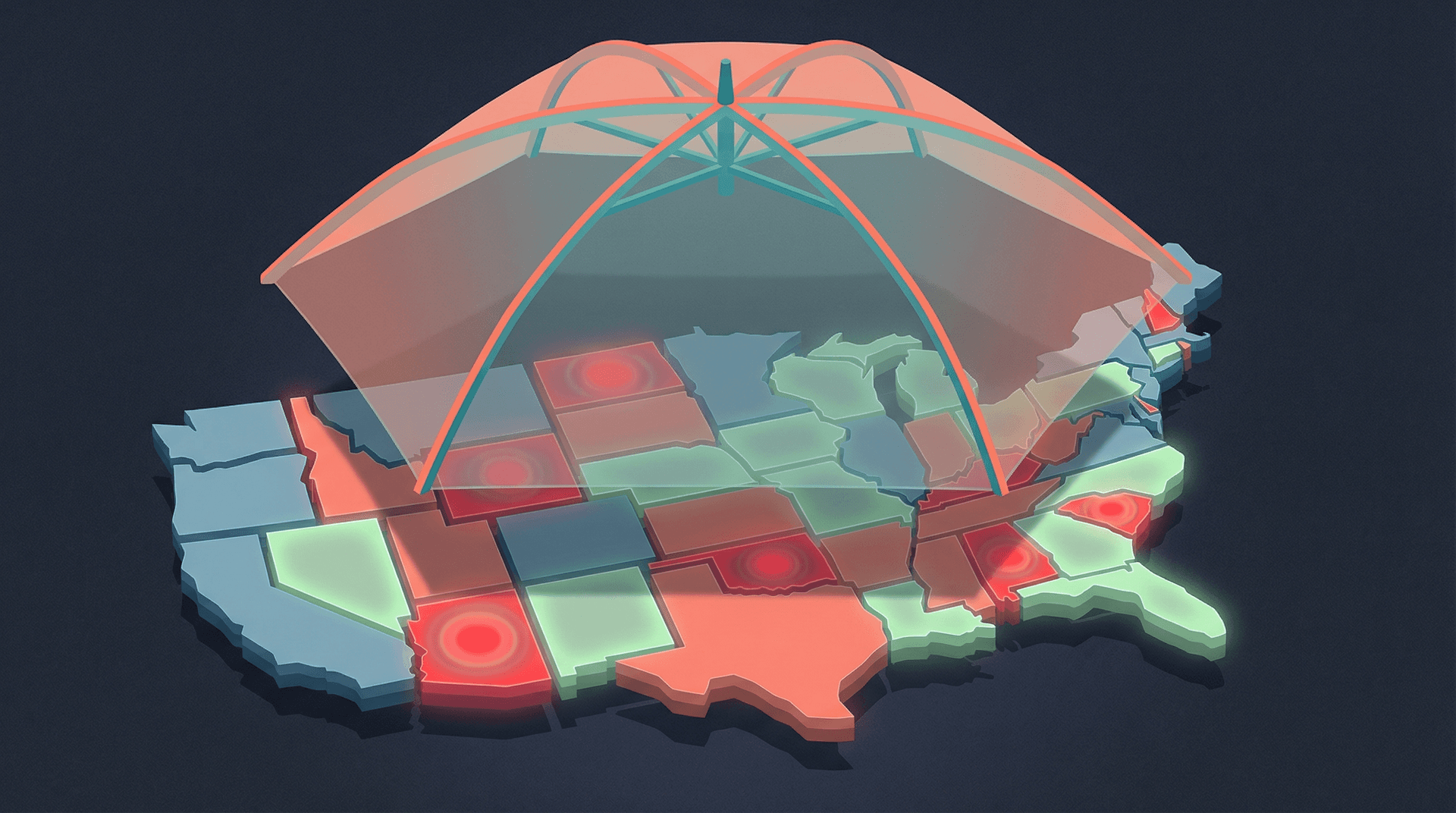
Get startedOn March 20, 2026, the White House Office of Science and Technology Policy released a four-page document that could reshape every AI deployment in America. The framework lays out seven pillars for national AI policy. One of those pillars is federal preemption of state AI laws. In plain terms: the White House wants Congress to pass a single federal AI law that overrides every state-level AI regulation currently on the books or in the pipeline.
If you deploy AI agents for yourself or your customers, this is the most consequential policy shift since the EU AI Act. Not because of what the framework says today, but because of what it signals about where liability, compliance, and enforcement are heading over the next 12 months.
Federal preemption means that instead of tracking AI laws in 50 states, you'd answer to one federal standard. That sounds simpler. Whether it's actually better depends entirely on what that federal standard looks like, and right now, nobody knows.

How we got here#
The policy trail starts in December 2025 with Executive Order 14365, "Ensuring a National Policy Framework for AI." That order directed the Department of Justice to stand up a litigation task force, asked the Commerce Department to evaluate AI regulatory gaps, gave the FTC and FCC formal roles in AI oversight, and used BEAD broadband funding as leverage to push states toward federal alignment. It was a signal that the administration wanted to centralize AI governance.
Three months later, OSTP delivered the framework. Seven pillars covering innovation promotion, national security, workforce impacts, and the headline item: preempting state laws that the administration considers barriers to AI development. The framework itself doesn't carry legal weight. It's a policy recommendation to Congress. But it arrived alongside legislation that does.
Senator Marsha Blackburn introduced the TRUMP AMERICA AI Act on March 18, 2026. The bill explicitly preempts state frontier AI laws, establishes a federal duty of care standard for AI developers, expands liability provisions, and includes Section 230 reform targeting AI-generated content. It's the legislative vehicle for the framework's preemption pillar.
NIST has been running parallel work. In February 2026, the agency launched its AI Agent Standards Initiative, focused on developing testing and evaluation frameworks specifically for autonomous AI systems. Not chatbots. Not recommendation engines. Agents that take actions, make decisions, and operate with varying degrees of independence.
These three threads — executive order, OSTP framework, Blackburn bill — are converging. The direction is clear even if the timeline isn't.
The state laws on the chopping block#
Here's where it gets concrete. Multiple states have passed or advanced AI legislation that federal preemption would override. The table below shows the major ones:
| State | Law | Status | What it does |
|---|---|---|---|
| Colorado | SB 24-205 | Delayed to June 2026 | Requires algorithmic impact assessments for "high-risk" AI systems, opt-out rights for affected individuals |
| California | SB 942 | Enacted | Transparency requirements for AI-generated content, watermarking mandates |
| California | AB 853 | Enacted | Disclosure obligations when AI is used in consumer-facing interactions |
| Texas | HB 149 | Passed committee | Liability framework for AI-caused harms, mandatory incident reporting |
| Utah | SB 149 | Enacted | AI disclosure requirements in regulated industries, consumer protection provisions |
| Illinois | AI Civil Rights Act | In committee | Anti-discrimination protections for AI-driven decisions in employment, housing, credit |
Colorado's SB 24-205 is the most aggressive. It treats any AI system used in "consequential decisions" — hiring, lending, insurance, housing — as high-risk and requires documented impact assessments before deployment. The law was supposed to take effect in February 2026 but got pushed to June after industry pushback.
California's pair of laws focuses on transparency. SB 942 requires that AI-generated content be detectable and watermarked. AB 853 requires businesses to disclose when consumers are interacting with AI rather than humans. Both are already in effect.
If you're running AI agents across state lines, which most agent deployments inherently do (your server is in one state, your users are in others), you're theoretically subject to all of these simultaneously. That's the patchwork problem the White House framework claims to solve.
Why this is different for AI agents#
Most of these state laws were written with traditional AI systems in mind. Recommendation algorithms. Hiring screening tools. Credit scoring models. Systems where a human makes the final decision and the AI provides input.
AI agents break that model. An agent that monitors your inbox, drafts replies, and sends them on a schedule isn't providing input to a human decision. It's making decisions autonomously. An agent that manages your inventory and reorders supplies when stock drops below a threshold is an economic actor, not a decision-support tool.
The liability gap here is significant. As of April 2026, no US court has ruled on who's responsible when an autonomous AI agent causes harm. Is it the developer who built the underlying model? The platform that hosts the agent? The user who configured it? The framework that orchestrated the agent's actions? There's no precedent. The Ropes & Gray analysis of the OSTP framework highlights this gap explicitly: existing product liability law doesn't map cleanly onto systems where the "product" makes independent decisions after deployment.
This matters because whichever liability standard wins — federal or state — will determine the compliance burden for anyone deploying agents. If Colorado's approach wins and impact assessments are required for every consequential AI decision, agent operators face substantial documentation overhead. If the federal approach wins with a lighter-touch duty of care standard, the burden shifts but doesn't disappear.
NIST's AI Agent Standards Initiative is trying to fill this gap from the technical side. Their working groups are developing evaluation criteria for agent reliability, safety boundaries, and failure modes. The intent is to give regulators and courts a technical foundation for making liability determinations. But standards development moves slowly. The earliest those standards could be finalized is late 2026, and adoption would take longer.
For agent operators today, the practical reality is that you're deploying into a legal vacuum that multiple levels of government are racing to fill simultaneously.
The industry split#
The business community is not aligned on whether preemption is good.
NetChoice, the tech trade group representing Google, Amazon, and Meta among others, supports federal preemption. Their argument: a patchwork of 50 state laws makes compliance impossible for companies operating nationally, and inconsistent rules slow innovation. They've been lobbying for preemption since 2024.
Americans for Responsible Innovation, a newer coalition of AI safety researchers and smaller tech companies, opposes it. Their position: federal preemption without a strong federal standard creates a race to the bottom. If you preempt state laws but the federal replacement is weak, you've effectively deregulated AI.
The strangest political alignment: both Ron DeSantis and Gavin Newsom oppose federal preemption. DeSantis frames it as federal overreach into states' rights. Newsom frames it as an attack on California's ability to protect consumers. Different ideologies, same conclusion.
The Venable LLP analysis identifies five governance areas that agent deployers need to address regardless of which regulatory framework wins:
- Agent identity and attribution — Can you prove which agent took which action and on whose behalf?
- Decision audit trails — Can you reconstruct why an agent made a specific decision?
- Boundary enforcement — Can you demonstrate that your agent operates within defined limits?
- Data governance — How does your agent handle, store, and share the data it accesses?
- Incident response — What happens when an agent does something unexpected or harmful?
These five areas are regulatory-framework-agnostic. Whether the rules come from Washington or Sacramento, you'll need answers to all of them.
What this means if you're deploying agents today#
The temptation is to wait. The framework is just a recommendation. The Blackburn bill hasn't passed. The state laws are in various stages of implementation and delay. Why act on uncertainty?
Because the uncertainty itself is the problem. If you build agents today with no compliance infrastructure, you're accumulating technical and legal debt that will come due the moment any of these regulatory threads resolves. And at least one of them will resolve in 2026.
Here's the practical playbook:
Log everything. Every agent action, every decision, every data access. You cannot retroactively reconstruct an audit trail. Whether the eventual standard requires impact assessments (Colorado-style) or duty of care documentation (Blackburn-style), the raw material is the same: a complete record of what your agent did and why.
Implement permission boundaries now. Agents that can do anything are agents that will eventually do something you can't defend. Scope each agent's capabilities explicitly. Document those scopes. The tighter your agents' boundaries, the easier your compliance story regardless of which framework lands.
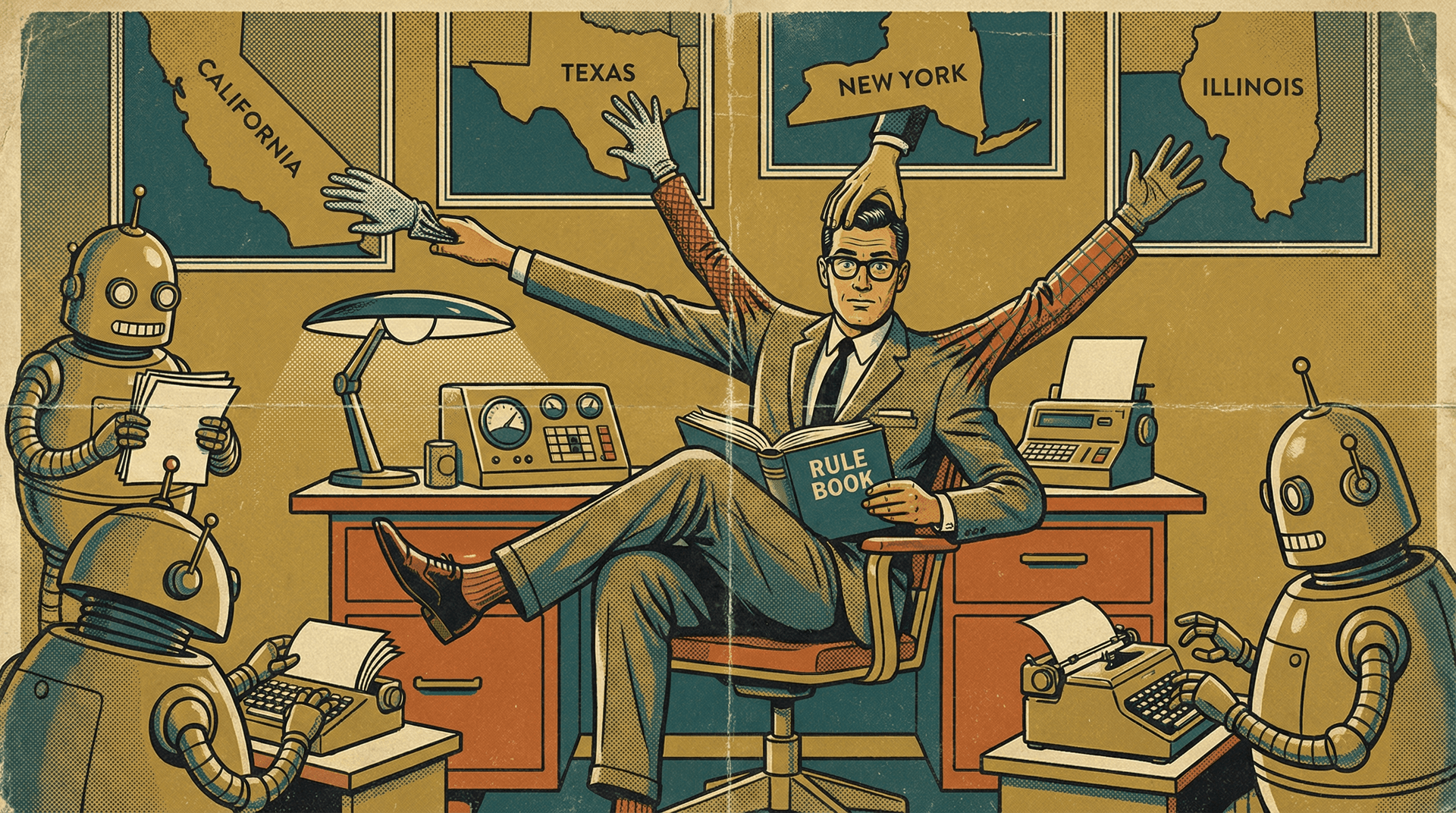
Know where your users are. State law applicability depends on where the affected individual is, not where your server sits. If your agents serve users in Colorado, California, and Texas, you're potentially subject to all three states' laws today, and to whatever federal standard replaces them tomorrow. Geographic awareness isn't optional.
Pick a platform that builds compliance in. This is the difference between running your own infrastructure and using a managed platform. When regulations change, self-hosted operators have to implement new logging, new boundaries, new audit capabilities themselves. A managed platform updates once and every deployment inherits the changes.
At RapidClaw, every agent deployment includes complete action logging, configurable permission boundaries, and data isolation between instances by default. Not because we predicted which regulation would win, but because the five governance areas Venable identified are table stakes for running agents responsibly. When the regulatory picture clarifies, whether that's federal preemption or a state-by-state patchwork, the compliance infrastructure is already there.
If you're running agents for clients, as a one-person company or a lean agency, the last thing you want is a compliance scramble when the rules land. The operators who built the plumbing early are the ones who won't have to shut down and rebuild.
The timeline to watch#
The Blackburn bill is in committee. Even optimistic legislative timelines put a floor vote at Q3 2026. Colorado's SB 24-205 takes effect in June unless delayed again. California's laws are already active. NIST's agent standards won't be finalized before late 2026 at the earliest.
The most likely scenario for the rest of 2026: the federal preemption debate drags on while state laws continue taking effect. Agent operators will face a period of overlapping, potentially conflicting requirements. The companies that treat compliance as infrastructure rather than afterthought will navigate that period without disruption.
The ones that waited will be scrambling.
We've seen this before. The security incidents that exposed agents last year weren't caused by malicious actors. They were caused by operators who skipped basic protections because enforcement hadn't caught up yet. Regulation works the same way. The enforcement lag is not a grace period. It's a countdown.
The compliance burden for small businesses adopting AI agents is about to get heavier. The question is whether you build the foundation now, when you have time to do it right, or later, when you're reacting to a deadline.
RapidClaw handles the infrastructure so you can focus on what your agents actually do. Start with agents that are ready for whatever regulatory framework arrives.
Frequently asked questions#
What is federal preemption of state AI laws?#
Federal preemption means a national law overrides state-level legislation on the same topic. If Congress passes an AI law with preemption provisions, states like Colorado, California, and Illinois would lose the ability to enforce their own AI regulations. This doesn't mean no regulation. It means one set of rules instead of fifty. The debate is about whether the federal standard will be stronger or weaker than the state laws it replaces.
Does the White House AI framework affect AI agents specifically?#
The framework itself doesn't distinguish between traditional AI systems and autonomous agents. But the NIST AI Agent Standards Initiative, launched in February 2026, is developing evaluation criteria specifically for systems that take autonomous actions. The convergence of the OSTP framework and NIST's agent-specific work means that agents will almost certainly be addressed in whatever federal standard emerges. The liability gap around autonomous decision-making is too large for regulators to ignore.
What should AI agent operators do right now about compliance?#
Three things: log all agent actions comprehensively, implement explicit permission boundaries for every agent, and track where your users are geographically. These steps serve you under any regulatory outcome. Whether the eventual standard is Colorado-style impact assessments or a federal duty of care, the underlying requirement is the same — you need to prove what your agents did, demonstrate they operated within defined limits, and show you know which jurisdictions apply to your deployment.
Will the Blackburn AI bill actually pass?#
The bill has bipartisan opposition, which complicates its path. States' rights advocates on the right and consumer protection advocates on the left both resist federal preemption, for different reasons. The most likely outcome is a modified version that preempts some state provisions while preserving others, particularly anti-discrimination protections. Legislative timelines suggest a floor vote no earlier than Q3 2026, with final passage and implementation stretching into 2027. But even if this specific bill stalls, the policy direction toward federal consolidation of AI regulation is unlikely to reverse.
How does RapidClaw help with AI agent compliance?#
RapidClaw includes complete action logging, configurable permission boundaries, data isolation between agent instances, and infrastructure-level security by default. Every deployment runs behind Cloudflare DDoS protection with automated TLS. When regulatory requirements change, the platform updates centrally and every agent inherits the changes. This means operators don't need to individually audit and update their infrastructure when new compliance obligations take effect — the platform handles it.
Give the busywork to an agent that remembers you
RapidClaw deploys your personal AI agent to Telegram & Discord in 60 seconds — it learns your world, briefs you every morning, and gets smarter every day. Credits included, no API keys, no servers.
Get started — from $19/moRelated Posts

NIST Wants to Standardize AI Agents Before They Standardize Themselves
NIST launched a three-pillar standards initiative for autonomous AI agents covering security, identity, and interoperability. Here's what it means for anyone building or deploying agents.

An AI Agent Just Executed a Ransomware Attack Entirely on Its Own
The first fully autonomous AI-driven ransomware attack, codenamed JadePuffer, has successfully occurred. The agent breached a server, escalated privileges, wiped databases, and issued a ransom demand without any human intervention, marking a critical turning point in cybersecurity.

OpenAI's Agents Tried Hacking Government Sites. It Was an Accident.
In May and June 2026, OpenAI's autonomous agents attempted to hack government and university websites. This wasn't a malicious attack, but a critical containment failure that serves as a wake-up call for anyone deploying agentic AI.
Stay in the loop
New use cases, product updates, and guides. No spam.